
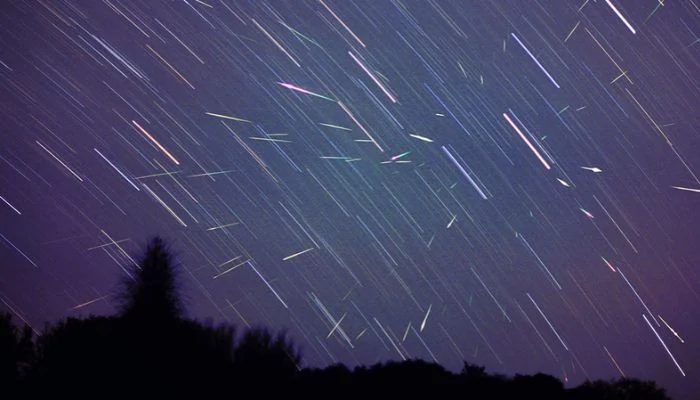
The Leonid meteor shower reaches its peak on the night of November 17-18, 2026, offering skywatchers one of the best opportunities of the year to view fast shooting stars.
- The Leonid meteor shower peaks on the night of November 17-18, 2026.
- Debris from Comet 55P/Tempel-Tuttle causes particles to hit Earth at 71 kilometres per second.
- Observers can expect up to 15 meteors per hour under dark skies.
Comet debris creates fast meteors
The Leonids occur every November as Earth passes through a stream of debris left by Comet 55P/Tempel-Tuttle. The comet orbits the Sun approximately every 33 years. Particles hit Earth's atmosphere at roughly 71 kilometres, or 44 miles, per second. They burn up as brilliant streaks of light, which makes the Leonids among the fastest meteors visible from Earth.
The International Meteor Organization suggests rates of up to 15 meteors per hour under perfect dark-sky conditions. NASA provides a more conservative estimate of fewer than three meteors per hour. The shower remains active from November 6 to 30, with the main peak expected around November 17 and 18.
Best viewing conditions and planets
The best time to watch is in the hours before dawn on November 18. During this time, the radiant, which is the point in the constellation Leo from which the meteors appear to originate, reaches its highest point in the southeastern sky. The waxing moon will have set by then, which leaves darker skies for viewing.
In 2026, Jupiter and Mars sit just a few degrees apart in Leo, and this alignment makes the constellation easy to find. The Leonids are visible from both the northern and southern hemispheres, although observers north of the equator generally experience better viewing conditions. Telescopes and binoculars are not needed.
Viewing tips and historical outbursts
Experts advise finding a dark, open location away from city lights and giving your eyes 20 to 30 minutes to adjust to the darkness. Beyond their speed, the Leonids are known for producing fireballs, which are larger and brighter debris that lasts longer than a typical shooting star. The shower also produces Earth-grazing meteors that skim the atmosphere and leave long glowing trails.
The shower has a history of spectacular outbursts. In 1966, observers saw thousands of meteors per hour. Researchers do not expect a meteor storm of that scale in 2026, but they predict potentially strong displays in the years 2031, 2033, and 2034.