
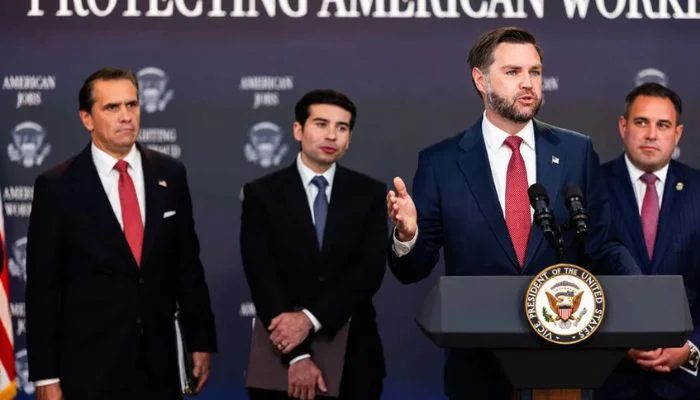
The administration announced Thursday, October 8, that it is suspending Microsoft, Adobe, and several major tech firms from the Permanent Labour Certification program, which allows H-1B visa holders to apply for green cards. The move escalates the crackdown on immigration and foreign hiring ahead of November's midterm elections.
Labour Secretary Keith Sonderling said the department will not accept or process new applications from these firms. Secretary Keith cited multiple active federal investigations into Microsoft and Adobe, claiming these companies alone have requested nearly 3 million foreign workers since 2009, securing 230,000 H-1B approvals and 100,000 permanent labour certifications.
Vice President JD Vance, speaking at a White House briefing, singled out Microsoft, pointing to its 6,000 layoffs in 2025 and alleging the company replaced American workers with H-1B visa holders. Vance said there has been no company in the United States that has abused this system more than Microsoft, adding that the administration would deny permanent residency applications until they show they are going to get serious about putting American workers first.
The announcement came the same day President Trump was set to award the National Medal of Science to Microsoft CEO Satya Nadella, alongside Nvidia's Jensen Huang, SpaceX's Elon Musk, and AMD's Lisa Su - all immigrants. Vance distinguished between extraordinary immigrants like Musk and Su and alleged systemic abuse, saying most Americans support bringing in talent who build something great.
Microsoft and Adobe didn't immediately respond to requests for comment. The suspension marks a major escalation in the administration's broader effort to overhaul legal immigration pathways for skilled foreign workers.
The administration's focus on tech employment practices remains a central theme for policy debates, with lawmakers calling for stricter enforcement of existing labor laws to protect domestic employment opportunities across various sectors. Observers note that the suspension could significantly alter how major technology corporations manage their global talent pipelines and workforce recruitment strategies in the coming years.
Corporate legal teams are currently reviewing the implications of the suspension to determine potential pathways for compliance and future visa application processes under federal guidelines. Labor unions and domestic worker advocacy groups have largely welcomed the administration's decisive actions, viewing them as a necessary step toward ensuring fair employment practices for American citizens.
Further updates from federal departments are expected as the investigations into tech hiring practices continue to unfold in the coming weeks and months ahead.