Archaeologists have uncovered thousands of pieces of luxury tableware from a 2,100-year-old shipwreck off the Mediterranean coast of Türkiye, with many items remaining remarkably intact. The wreck lies off Adrasan in Antalya province at a depth of up to 55 metres, where underwater excavations have been underway since 2025.
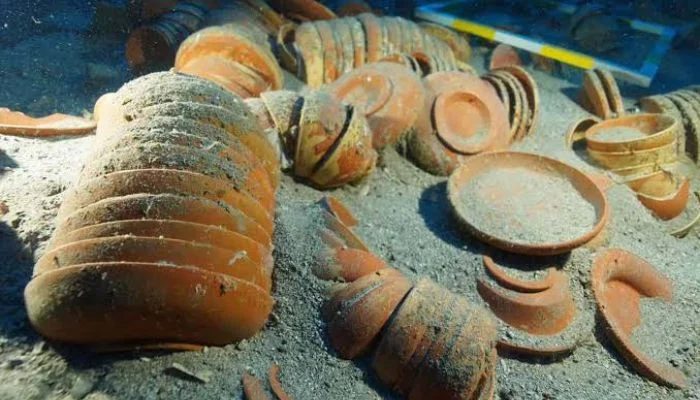
Researchers found what is essentially an ancient shipment of fine dinnerware. The cargo includes plates, bowls, and trays in 122 different shapes and sizes, including dishes designed for nuts, soup, and fish.
The ceramics are believed to have come largely from Rhosus, an ancient settlement near modern-day Arsuz in southern Türkiye. Rhosus ceramics were sought after across the Roman world, and their reputation was strong enough to appear in the writings of Roman statesman Cicero.
In a letter dating to 50 BC, Cicero mentioned ordering vessels from Rhosus for his friend Atticus. One of the most striking parts of the discovery is how the dishes survived.
Merchants packed the ceramics into wooden crates and placed clay between individual pieces to stop them from smashing into one another during the voyage. This simple packing method protected much of the cargo even after the ship sank and spent more than two millennia on the seabed.
Archaeologists have also found amphorae linked to several Aegean islands, suggesting the vessel was carrying goods from multiple production centres. Coins found at the site date to the first century BC, helping researchers narrow down when the ship made its final journey through a busy Mediterranean trade network linking the eastern Mediterranean with Greece and Italy.
Researchers are continuing to excavate the site with the help of underwater robotic equipment. More than 2,000 years after the ship failed to deliver its cargo, the plates and bowls are finally reaching the surface - proving that ancient packaging could perform better than anyone might have imagined.
The discovery offers unprecedented insights into ancient maritime commerce, manufacturing techniques, and consumer habits during the classical era. Marine archaeological teams are now planning to preserve and display these artifacts in regional museums for public exhibition and further academic study.
Experts note that such well-preserved organic and ceramic assemblages are extremely rare in underwater archaeology. The meticulous documentation of the site will likely rewrite parts of our understanding of ancient shipping logistics across the Mediterranean basin.