
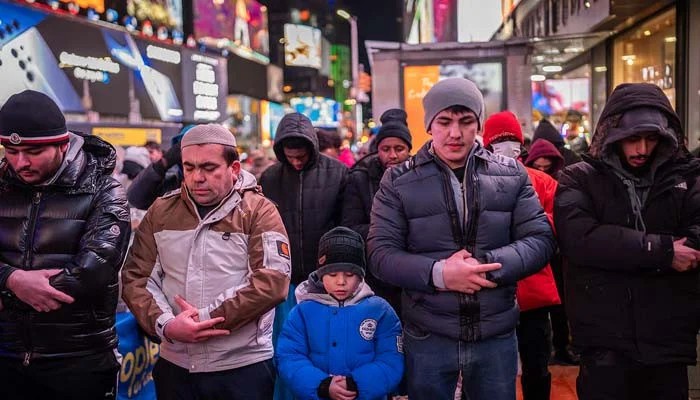
Asad Dandia was eight when he watched the September 11, 2001 attacks on television at his Pakistani immigrant parents' home in New York. Then came the backlash - years of Islamophobia as Americans processed attacks that had killed nearly 3,000 people. There was anger, suspicion and worse. At 19, Dandia experienced a police informant posing as a friend to infiltrate his family home, part of a now-disgraced surveillance effort purportedly seeking to detect extremism. Today, though, the 33-year-old historian finds a New York transformed: one with its first Muslim mayor, public prayers in Times Square and new mosques rising across the city.
"Twenty-five years after 9/11, we mourn, and we grieve what happened, and at the same time, we recognise that I am not responsible for what happened," he told AFP. "I don't deserve to be targeted for what happened, and I am as much of a New Yorker as anybody else in that respect," said Dandia, who leads walking tours centred on the city's Muslim communities. Islamophobia surged in the United States after the 2001 attacks in which militants hijacked airliners and flew them into Manhattan's World Trade Centre and the Pentagon outside Washington. A fourth plane crashed into a Pennsylvania field after a passenger revolt.
Muslims reported increased public assaults and harassment, and some stopped wearing visual markers such as hijabs in a bid to conceal their religion. Meanwhile, US authorities monitored Muslims by requiring thousands of men and boys to register with the government, leading to many being deported from the country. "Everyone was in such fear," said Pakistan-born Mohammad Razvi, who founded the Council of Peoples Organisation nonprofit to support Muslims in New York after 9/11. "We had gunshots fired in our neighbourhood by individuals who felt that we were responsible," he added.
In New York, police began surveilling hundreds of Muslims as part of their counterterrorism strategy, often targeting people without evidence of wrongdoing. Dandia experienced this as a 19-year-old college student, when a young Bangladeshi man joined a mutual aid charity he had started. The pair grew close: sharing meals, playing sports and even sleeping at Dandia's home. But seven months later, the man revealed that he was an NYPD informant sent to monitor Dandia and his community. After his ordeal, Dandia and rights groups won a landmark legal settlement that restricted the NYPD from launching similar surveillance programmes and established a watchdog to monitor the force.