
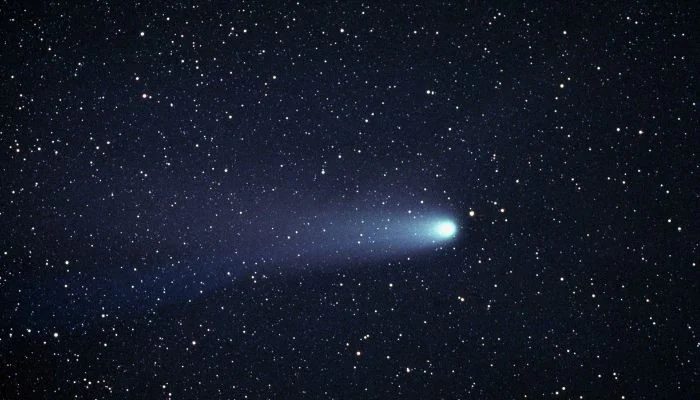
Stargazers are in for a treat as the Orionid meteor shower reaches its peak between October 21 and October 22. This annual celestial event occurs between October 2 and November 7, and is unique because its meteors are debris from the famous Halley's Comet, which passes Earth once every 75 to 76 years.
Under ideal conditions, the observation rate is approximately 15 to 20 meteors per hour. These meteors are exceptionally fast and bright, traveling at a speed of roughly 66 kilometers per second, often leaving glowing trails in their wake.
While they appear to originate from the vicinity of the star Betelgeuse in the Orion constellation, they can emerge from any part of the sky. To witness this, observers should head to a dark location away from city lights and allow their eyes to adjust to the darkness.
No special equipment is required to view this natural phenomenon. Although a waxing gibbous moon may obscure some fainter meteors, it will set early in the morning, providing nearly three hours of complete darkness before dawn.
Halley's Comet was last seen in 1986 and will not return until 2061; therefore, this shower offers a rare opportunity to witness dust from one of history's most renowned comets. The Orionid shower has been recorded since at least 585 A.D., having been documented by Chinese and Japanese astronomers.
For those planning to watch, experts suggest lying flat on your back and looking up at the sky with a wide field of view. Patience is key, as the meteors appear sporadically throughout the night.
The Orionids are known for their speed, which makes them particularly spectacular. Because they hit the Earth's atmosphere at such high velocities, they often disintegrate into bright fireballs.
This event serves as a reminder of the vastness of our solar system. The debris field left behind by the comet remains in its orbital path, and Earth passes through this stream of dust every year.
As we look toward the sky this week, we are essentially witnessing the remnants of a cosmic traveler that has been orbiting the sun for millennia. It is a perfect opportunity for amateur astronomers and families to engage with the wonders of space.
Make sure to check local weather forecasts, as clear skies are essential for the best viewing experience. If the weather permits, this week promises to be a memorable celestial display for observers across the globe.