
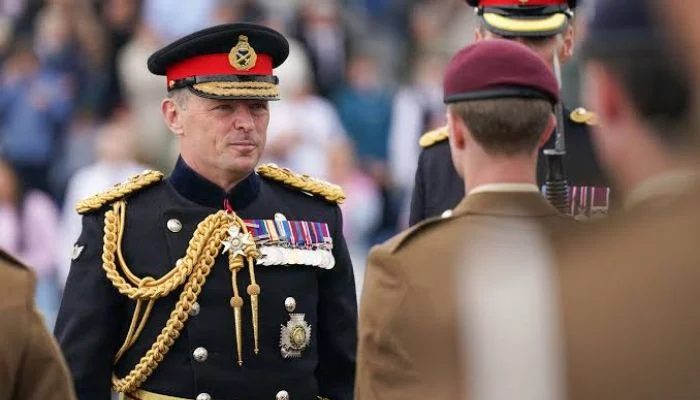
Britain's army chief has warned that ordinary citizens will soon be asked to make sacrifices for national defence, telling hundreds of soldiers that the country may need them to fight a war. General Sir Roly Walker delivered the warning during a visit to Catterick Garrison in North Yorkshire, where he told around 700 troops that political leaders were preparing to speak openly about the dangers facing Britain.
"You didn't know this, but our nation is going to need you," Walker told the soldiers. He said the public could no longer afford to treat war as something that happens elsewhere, pointing to an increasingly dangerous international security environment.
According to Walker, politicians will soon begin a "frank conversation" with British citizens about the risks facing the country and what they may have to give up to strengthen national security. That could mean difficult choices over government spending and a greater role for civilians in preparing Britain for a potential conflict.
"They are going to try and explain to our citizens that our citizens have got to consent to sacrifices to prioritise defence and security," he said. His remarks come as Britain faces pressure to increase military spending, particularly over concerns about Russia and the possibility of a wider confrontation involving NATO.
The warning also follows a parliamentary inquiry launched in July into how prepared British civilians are for war, including whether essential infrastructure and public services could withstand an attack. Walker did not announce conscription or any immediate plans to mobilise civilians.
Instead, he told the soldiers that public support would be essential if they were called upon to fight. Ultimately, he said, the defence of the country could rest on the shoulders of its youngest and least experienced troops.
Military analysts across Europe have noted that traditional defense postures are shifting rapidly as global tensions rise. Governments are increasingly looking at total defense concepts that involve the entire fabric of society rather than just professional armed forces.
Public policy experts suggest that communicating these potential hardships clearly will be one of the most significant political challenges for the current administration. Citizens accustomed to decades of peace and economic stability may find the sudden pivot toward wartime readiness deeply unsettling.
As discussions continue within parliament, lawmakers are expected to debate the exact nature of these required civic contributions in the coming months. Meanwhile, military officials maintain that proactive planning remains the only reliable deterrent against modern geopolitical aggression.