
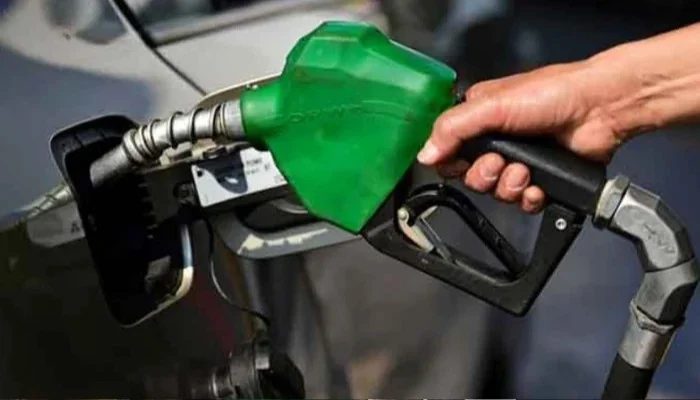
The federal government collected Rs1,567 billion through the petroleum levy in fiscal year 2025-26, exceeding its budget target of Rs1,468 billion by around Rs99 billion, according to a written reply submitted to Parliament. In a written reply to a question from Aliya Kamran, Minister for Petroleum Ali Pervez Malik stated that the levy was introduced under the Petroleum Products (Development Surcharge) Ordinance, 1961 (Ordinance No. XXV of 1961), promulgated on July 1, 1961.
Its original purpose was to provide for the imposition and collection of a development surcharge on petroleum products. The collection from the levy, which has been part of the federal government's general revenues since its introduction in 1961, increased from Rs580 billion in FY2022-23 to Rs1,567 billion in FY2025-26.
The government said no decision had been taken to change the levy's basic mandate, which was to generate revenue for the federal government. However, its name, coverage, rate ceilings and collection arrangements had been revised over time by Parliament through Finance Acts.
Within the prescribed limits, the federal government notifies product-wise levy rates in the official gazette from time to time, taking into account international petroleum prices, fiscal requirements and commitments under the International Monetary Fund (IMF) programme. The government maintained that the levy had achieved its stated objective of generating revenue for the federal exchequer, with collections rising substantially over the period covered in the parliamentary reply.
Meanwhile, the Power Division told the National Assembly that Iran is supplying electricity to Pakistan under an electricity import agreement signed between Pakistan and Iran on November 6, 2002, with subsequent amendments, including the 10th Amendment initiated on December 27, 2024, for two years. In a reply to a question from Usman Badini, Minister for Energy Awais Leghari stated that under the amended arrangement, the maximum power demand is 204 MW through four interconnection lines, with a take-or-pay obligation of 30 million kWh per month.
The electricity is being supplied to the Makran region of Balochistan, including Gwadar, through the cross-border transmission system, which has a combined maximum import capacity of 204 MW. At present, an amount of approximately $12 million is payable to Tavanir against electricity imported from Iran.
Separately, the National Assembly was told that capacity payments to power generation companies increased to Rs1,711 billion in fiscal year 2025-26 from Rs1,669 billion in FY2024-25, while the power sector's circular debt reached Rs1,675 billion by June 30, 2026. In a written reply to a question from Changaze Ahmad Khan, Minister for Energy Awais Leghari said the country generated 128,540 gigawatt-hours of electricity in FY2025-26, compared with 127,046 gigawatt-hours in the preceding fiscal year.
The minister said the amount payable against China-Pakistan Economic Corridor (CPEC)-related power projects stood at Rs400.559 billion as of June 30, 2026.