
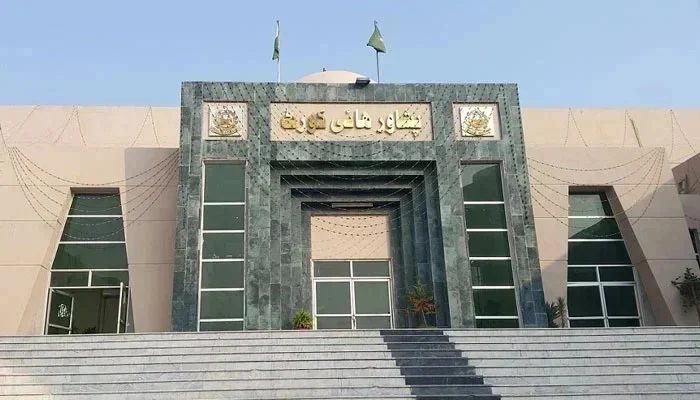
The Peshawar High Court (PHC) on Saturday issued a significant ruling, ordering the immediate release of 28 Pakistan Tehreek-e-Insaf (PTI) workers who had been detained under Section 3 of the Maintenance of Public Order (MPO) across various districts of Khyber Pakhtunkhwa. The court's decision marks a pivotal development in the ongoing legal challenges faced by the party members following recent political unrest in the province.
A two-member bench of the high court, comprising Justice Syed Arshad Ali and Justice Babar Sattar, presided over the hearing of the writ petitions filed by the 28 applicants. Among the petitioners were individuals identified as Ihsan, Haris, and Babar, who had challenged the legality of their detention before the provincial superior court.
During the proceedings, the legal counsel representing the petitioners informed the bench that the detainees hailed from diverse regions of Khyber Pakhtunkhwa, including Peshawar, Karak, Tank, Kohat, Lakki Marwat, Torghar, Bara, and Orakzai. The lawyers argued that the arrests were politically motivated and lacked sufficient legal grounds under the existing framework of the MPO.
The petitioners submitted that the 28 PTI workers were taken into custody on 12 October under Section 3 of the MPO. They contended that the detention orders were issued without due process and were essentially an attempt to suppress political expression, thereby describing the entire detention process as unlawful and unconstitutional.
After hearing the arguments from both sides, the court issued a short order granting interim relief to the petitioners. The bench directed the relevant authorities to ensure the immediate release of the detainees, provided they comply with specific judicial conditions aimed at maintaining public order.
As a condition for their release, the court mandated that each petitioner must submit a formal affidavit. In these documents, the workers are required to undertake that they will not engage in any anti-state activities or participate in any actions that could compromise public safety or fall within the scope of Section 3 of the MPO.
This judicial intervention highlights the court's role in balancing the state's authority to maintain order with the fundamental rights of citizens to political association. The requirement for affidavits serves as a legal safeguard to ensure that the released individuals remain within the bounds of the law following their liberation.
The legal teams for the petitioners expressed satisfaction with the court's decision, noting that the ruling provides much-needed relief to the families of the detained workers. The court has formally adjourned the proceedings until 27 October, at which point further arguments or developments in the case will be reviewed.
Observers suggest that this ruling could set a precedent for other similar cases currently pending in the lower courts of Khyber Pakhtunkhwa. The political climate in the province remains tense, and the court's stance on the application of the MPO is being closely monitored by legal experts and political analysts alike.
The provincial government and the law enforcement agencies are expected to comply with the court's directives promptly. The release of these 28 workers is seen as a significant legal victory for the Pakistan Tehreek-e-Insaf, which has been advocating for the release of its members detained during recent protests and political activities.