
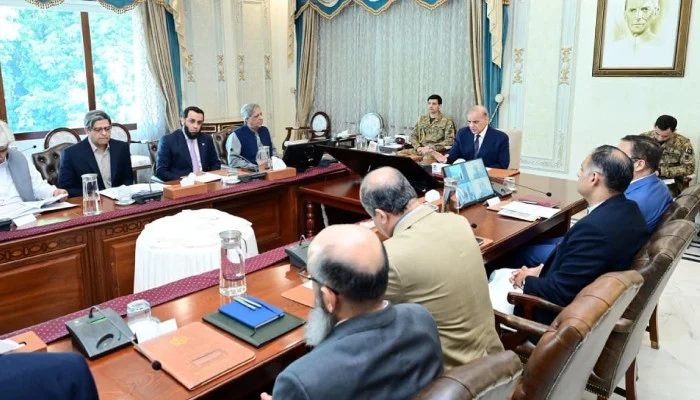
Prime Minister Shehbaz Sharif on Friday approved an indicative wheat price of Rs4,500 per maund for 2027, up Rs1,000 from last year's Rs3,500, in a decision aimed at supporting farmers and boosting domestic production. The prime minister said the increase was meant to provide relief to growers facing higher production costs, rising petrol prices, and inflationary pressure.
He said giving farmers an effective incentive to sow wheat was among the main objectives of the decision, a Prime Minister's Office news release said. The prime minister stated that the decision would be an important step towards strengthening national food security, encouraging local production, and bringing stability to the agriculture sector.
The new price is expected to help farmers recover their input costs and earn a reasonable profit, he said. The farmers have faced financial difficulties in recent years because of inflation and rising agricultural expenses, while Pakistan has also had to import wheat over the past two years, the prime minister noted.
The government expects the indicative price to encourage growers to take greater interest in wheat cultivation, leading to extensive sowing in the coming season and better prospects for domestic output. The prime minister acknowledged the guidance of President Asif Ali Zardari and Mian Muhammad Nawaz Sharif in the matter, as well as the consultation and cooperation of the chief ministers of Punjab and Sindh.
He expressed special thanks to Punjab Chief Minister Maryam Nawaz for her cooperation and valuable suggestions during the consultative process, and appreciated her role in it. He also thanked Sindh Chief Minister Syed Murad Ali Shah for his cooperation.
Meanwhile, Prime Minister Shehbaz Sharif on Friday reiterated Pakistan's willingness to open its economy to promising international markets and consult globally recognised economic experts to advance the country's economic growth and prosperity. The prime minister expressed these views during a meeting with Peter Briggs, Managing Director of North American Operations at international consulting firm Alvarez & Marsal (A&M).
Shehbaz Sharif said that after achieving economic and fiscal stability, the government was taking effective measures to introduce deep-rooted structural reforms and promote export-led growth and a productive economy. He highlighted the government's focus on improving the performance and efficiency of the domestic manufacturing sector while taking measures to attract foreign direct investment (FDI).
The prime minister said the government was pursuing a strategy to assess the economic viability of state-owned enterprises (SOEs) and subsequently move towards privatisation to support the national economy and promote growth.