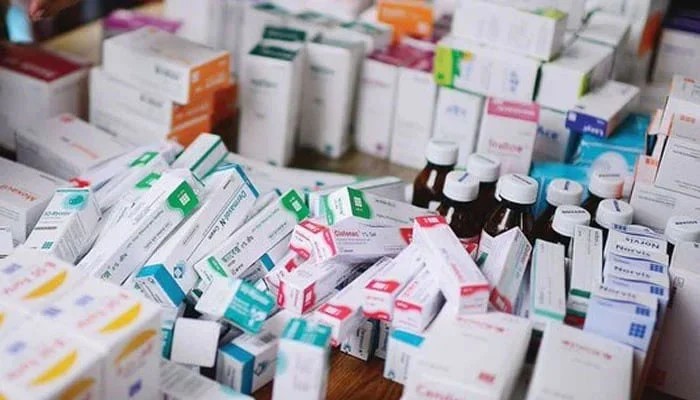
Prices of 52 new life-saving medicines have been finalised by a high-powered government committee and sent to the federal cabinet for approval, Federal Health Minister Syed Mustafa Kamal told the Senate on Tuesday while explaining delays in fixing prices of new drugs entering the Pakistani market.
Responding to a calling-attention notice moved by Senator Zeeshan Khanzada over delays in the approval of drug prices, the minister said the pricing of new medicines involved scrutiny by the Drug Regulatory Authority of Pakistan (Drap), followed by a review by a six-member committee headed by the federal finance minister before the cases reached the cabinet.
"Fifty-two cases have been finalised by our committee and sent to the cabinet," Kamal told the House, adding that prices of another 35 medicines had been fixed during the previous month. He said pharmaceutical companies seeking to introduce new medicines in Pakistan first applied for price fixation, after which Drap scrutinised their applications before the cases moved through the prescribed government approval mechanism. The six-member committee constituted by the federal cabinet, he said, examined the proposed price of each molecule as well as the formula used to determine it before making its recommendations.
Mustafa Kamal acknowledged that the process could take time, saying several checks had been introduced into the drug-pricing mechanism because of controversies surrounding medicine prices in the past. Referring to the drug-pricing controversy during the previous Pakistan Tehreek-e-Insaf (PTI) government, the minister said then health minister Aamir Mehmood Kiani had to leave office over the issue. "Many checks have been put in place, and because of these checks the decision-making process has been delayed," Kamal told the Senate.
The minister was responding to Senator Khanzada, who had raised the issue through a calling-attention notice and questioned why the prices of a number of medicines awaiting approval had not yet been cleared. Khanzada also raised the performance of Pakistan's pharmaceutical industry, saying its exports had increased rapidly despite what he described as little contribution from the government. Rejecting the assertion, Mustafa Kamal said pharmaceutical exports had increased significantly in the recent past and maintained that the government had facilitated manufacturers in expanding their access to overseas markets.
He said Pakistan was currently exporting pharmaceutical products to 52 countries and that agreements worth around $300 million had been reached following a recent conference with China. The health minister also told the House that Pakistan's pharmaceutical regulatory system was due to undergo a World Health Organisation (WHO) assessment on 1 October. He said the assessment would cover Drap as well as regulatory arrangements in all the four provinces and could have significant implications for Pakistan's access to international pharmaceutical markets.