
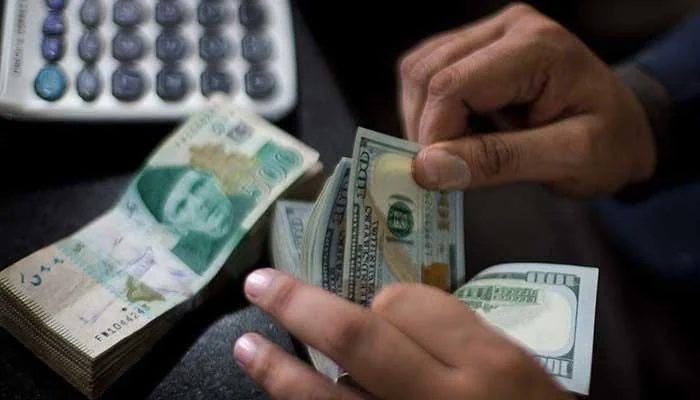
The Pakistani rupee's recent stability is likely to hold in the near term on the back of improving foreign exchange reserves, but a sustained rise in oil prices and non-oil imports could pressure the currency over time, an analyst said on Saturday.
The rupee was little changed in the outgoing week, closing at 276.81 against the US dollar in the interbank market on Monday, compared with 276.75 on Friday. The State Bank of Pakistan (SBP) foreign exchange reserves stood at $21.52 billion as of October 23, reflecting a gradual improvement in the country's external position and providing a buffer for the rupee, said Saad Hanif, head of research at Ismail Iqbal Securities.
"The sustainability of this stability remains closely linked to the trajectory of global oil prices and the resulting import dynamics," Hanif said. The recent increase in the import bill has been largely driven by non-petroleum imports rather than energy-related purchases, he noted.
Pakistan's total imports rose 11.5 percent month-on-month (MoM) to $6.49 billion in September, while non-petroleum imports rose to approximately $5.22 billion, reflecting stronger demand across non-energy categories, he added. In contrast, petroleum group imports declined 13.9 percent MoM to $1.27 billion, partly due to lower liquefied natural gas (LNG) imports amid reduced cargo arrivals, the analyst noted.
"This suggests that the recent widening in import demand has not translated into a proportionate increase in the petroleum import bill, despite the substantial rise in international oil prices," he said. "Nevertheless, with global oil prices remaining elevated, the current moderation in energy imports may prove temporary, particularly as higher crude prices feed into the domestic import bill," Hanif warned.
"Accordingly, while existing reserve buffers provide support to the PKR in the near term, a sustained increase in the oil import bill, alongside continued growth in non-oil imports, could gradually widen external financing requirements and challenge exchange rate stability," he concluded. The market remains cautious as analysts monitor the SBP's policy stance and the government's fiscal management in the coming months to ensure that the current stability is not undermined by external shocks.