
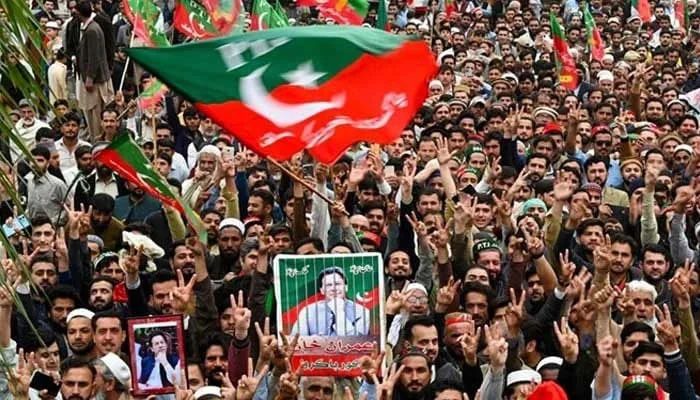
A section of those described as serious and relatively pragmatic leaders within the Pakistan Tehreek-e-Insaf (PTI) believes that the party's fast-shrinking political space could have been checked, and potentially reversed, had it pursued a more flexible political strategy instead of allowing confrontation to dictate its course.
According to party sources, PTI's social media campaigners, sympathetic YouTubers and vloggers operating from abroad, and some leaders who have left the country have played a significant role in pushing the party towards an increasingly confrontational political narrative. They believe that on several occasions, the party had opportunities to ease tensions, reopen political channels, and move towards normalisation.
However, these opportunities were repeatedly lost as voices advocating restraint or a more pragmatic approach came under attack from within the party's own social media support network. The criticism centres on what these leaders see as an increasingly influential group of hardline elements that has made it difficult for the party to reconsider its political strategy.
Those advocating a pragmatic approach, according to this assessment, risk being portrayed as disloyal or compromising, while the most confrontational voices often dominate the party's public discourse. As a result, the party's political course has continued to favour escalation at a time when, in the view of its more pragmatic elements, reducing tensions and restoring political engagement had become increasingly important.
The loss of PTI's government in Khyber Pakhtunkhwa has further sharpened these concerns. With the province having been the party's only provincial government, the latest setback has raised questions within the party about the effectiveness of its political strategy and the consequences of allowing hardline voices to shape decision-making.
For these party circles, the central question is no longer simply how the PTI should respond to its latest political setback, but whether it can regain the space it has gradually lost. They believe that doing so would require a reassessment of the party's confrontational approach and a greater willingness to engage politically rather than continue a cycle of escalation.
The role of overseas-based commentators and social media activists has emerged as a particular source of concern. While their platforms have helped PTI maintain an extensive public presence, critics within the party believe that the online narrative has increasingly constrained the leadership's room for manoeuvre.
Political decisions, they argue, cannot be guided primarily by the pressure of social media campaigns or the reactions of influential commentators who do not necessarily bear the direct consequences of political developments on the ground. The criticism also extends to party leaders who, according to these sources, have contributed to sustaining a hardline narrative without offering a viable political route out of the crisis.
The challenge for PTI's relatively pragmatic leadership is to establish whether it can reclaim control of its political messaging, protect space for internal debate, and pursue a strategy that prioritises political recovery over confrontation. The loss of its provincial government has added urgency to an internal debate over whether PTI's political isolation was inevitable or whether repeated missed opportunities, compounded by internal pressure, shaped the current crisis.