
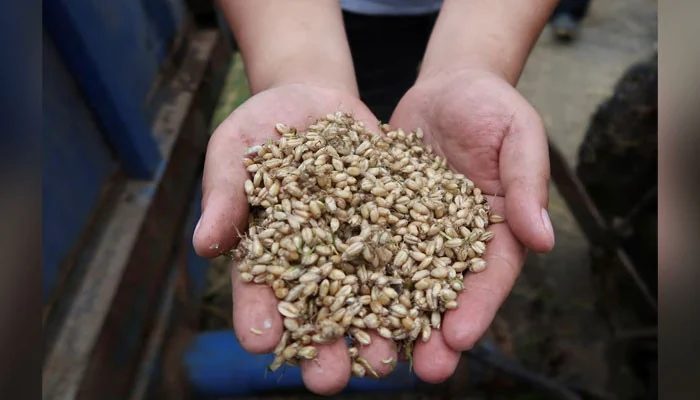
In a first-of-its-kind step, Punjab's food safety and consumer protection department has quietly accepted that the old imported wheat stock lying in its godowns is of poor quality and unfit for milling, months after it started releasing it. In a direction to all flour mills on Thursday, the department said that owing to quality concerns, the lifting of old imported wheat for flour mills has been stopped.
All mills are requested to lift only local wheat. The decision regarding imported wheat is pending and will be communicated once finalised.
Stakeholders argued that while the order may look merely a corrective measure, in administrative terms, it shows gross slackness. It is, in fact, a direct admission that the wheat being pushed to mills for public consumption was compromised, they added.
This differs from the provincial food safety and consumer protection department's earlier position, which denied allegations of substandard wheat. When flour mill owners, represented by the Pakistan Flour Mills Association (PFMA), raised concerns about wheat quality several months ago, the department said it would take up the matter with the federal government, while distribution continued.
For several months, flour millers raised concerns about the quality of wheat, citing discolouration, shrivelling, insect infestation, and the risk of fungal growth. The department had maintained that the supplies were within permissible limits and that the complaints were not supported by its assessments.
The department has now advised mills not to lift the imported wheat stock due to quality concerns. This has raised questions about the basis for the earlier assessments and the reasons for the change in position.
The milling industry has also expressed concerns about imported wheat procured several years ago and stored in open and covered godowns. According to millers, the grain had deteriorated in appearance, gluten strength, and nutritional value.
They said flour produced from the stock was darker in colour, had poor binding properties, and an unpleasant smell. Millers also reported consumer complaints, adding that their options were limited as official releases relied largely on the older stock to help meet demand.
Stakeholders have also raised concerns about the quality of Punjab's locally procured wheat, particularly reserves stored for 2 to 3 years in gunny bags and open plinths. They say the condition of this stock may be comparable to that of older wheat imported by PASSCO, and that its suitability for human consumption also needs to be assessed.
Stakeholders have called for a broader review of wheat procurement and storage practices in Punjab, arguing that quality concerns should be examined across both imported and locally procured stocks rather than focusing on PASSCO's supplies alone.