
Virtual assets are changing how money moves, investments are made, and financial services are delivered. From central bank digital currencies and stablecoins to cryptocurrencies and tokenised real-world assets, governments are exploring new ways to make financial systems efficient and more accessible.
For Pakistan, this presents both an opportunity and a policy challenge. The question is not simply whether it should embrace digital currencies or crypto-assets.
It is which instruments can deliver tangible economic benefits, under what conditions and with what safeguards. These instruments are often grouped together as virtual assets, but they are fundamentally different.
Treating them as interchangeable could lead to policies that encourage speculation and capital outflows while overlooking opportunities to improve payments, mobilise investment and strengthen the formal economy. A digital fiat currency, potentially a digital rupee issued by the State Bank of Pakistan (SBP), would represent SBP money in digital form.
Unlike a privately issued token, it would be a direct liability of SBP. Depending on its design, it could support digital payments, improve settlement efficiency and potentially expand access to financial services.
However, it would require careful consideration of privacy, cybersecurity, operational resilience and the potential impact on commercial bank deposits. Pakistan must first establish whether a central bank digital currency would deliver meaningful benefits beyond its existing digital payment infrastructure.
Stablecoins, by contrast, are privately issued digital tokens designed to maintain a stable value, usually by reference to a currency such as the US dollar. They could facilitate certain international payments, remittances and business settlements.
Yet their stability depends on the quality of their reserves, redemption arrangements and the credibility of their issuers. A stablecoin is not equivalent to a dollar deposit in a bank, and its holder may not have an unconditional claim on the underlying reserves.
For Pakistan, dollar-linked stablecoins present a particularly important policy question. They could improve the efficiency of legitimate cross-border transactions, but widespread use could also encourage dollarisation, enable value to be held outside the domestic banking system and complicate foreign-exchange management.
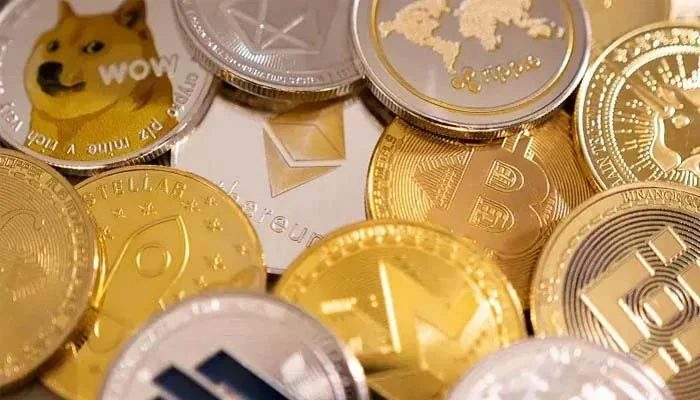
Cryptocurrencies, such as bitcoin and ether, serve different purposes. Their market values are generally driven by supply, demand, investor confidence and the utility of the underlying networks.
They can support innovation and investment in digital-asset businesses, but their prices may fluctuate sharply, and investors can lose substantial amounts. Regulating exchanges and service providers is necessary, but it does not guarantee the value or legitimacy of every asset traded on them.
Finally, asset-backed tokens represent, or purport to represent, rights in underlying assets such as government securities, commodities, property or investment funds. Tokenisation could make certain investments more accessible, reduce transaction friction and facilitate settlement.
However, a token that merely refers to an asset is not necessarily equivalent to legal ownership of it. Enforceable rights, reliable custody, transparent valuation and effective dispute resolution are essential.