
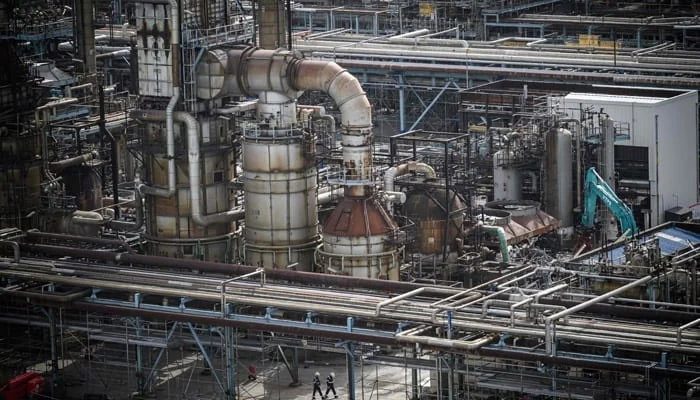
The government's latest intervention in petrol pricing has raised concerns in Pakistan's refining industry, with stakeholders warning that it could push domestic refineries towards negative gross refining margins (GRMs). They say it undermines their financial viability and jeopardizes the country's $6 billion refinery upgradation programme.
Usama Qureshi, vice chairperson of Cnergyico PK Limited, asked, "How can you operate a capital-intensive industry when the goalposts change every other day? How can the government expect refineries to sell products below cost?
Who will invest billions of dollars in a sector where there is no policy certainty?" Qureshi said refineries are already unable to recover actual diesel crack spreads because of government intervention, while the latest petrol pricing decision would further squeeze their margins.
He noted that the industry is importing higher-priced US crude, which yields more petrol than the Middle Eastern grades previously processed. The revised pricing formula could push their overall refining margins into negative territory, effectively penalizing them for importing US crude.
The refining sector has already absorbed a financial burden exceeding Rs80 billion through the compression of diesel crack spreads. Industry representatives fear the latest intervention could impose further losses, making it harder for refineries to sustain operations and finance planned investments.
At the center of the controversy is the government's decision to restrict the calculation of ex-refinery petrol prices to pre-war levels, while passing on the benefit to consumers through a reduction in the petroleum levy. Qureshi estimated that the arrangement could impose an additional burden of around Rs49 per litre on locally refined petrol.
The Cabinet approved the revised pricing mechanism on 30 October for an initial period of 30 days. Under the arrangement, petrol's import price will be determined using the actual import cost of the relevant Pakistan State Oil (PSO) cargo.
If the actual cost is unavailable, the premium, incidentals, and customs duty applicable to the last available cargo will be used. However, refineries must calculate their ex-refinery petrol prices using the premium, incidentals, and customs duty levels prevailing on 7 March 2022, before the war-related disruption.
The difference between the import price and the regulated ex-refinery price will be surrendered by refineries under the petroleum levy head of account C03901. The government has directed that the resulting benefit be passed on to consumers exclusively through a corresponding reduction in petrol prices.
Industry estimates suggest the arrangement could impose an additional burden of approximately Rs49 per litre on domestically refined petrol, while the government intends to provide consumers with relief through a Rs14.71-per-litre reduction in the petroleum levy.