
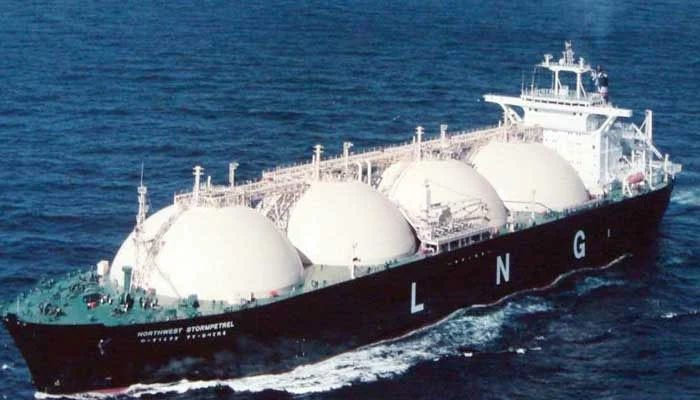
Pakistan received another liquefied natural gas (LNG) cargo from Qatar on Tuesday, providing some relief to its strained gas supply system as the country faces mounting uncertainty over winter imports, declining indigenous gas supplies to the Sui Northern Gas Pipelines Limited (SNGPL) network, and growing demand from power and industrial consumers.
The LNG vessel Ejnan arrived at Pakistan's port and berthed at the Pakistan GasPort Limited (PGPL) terminal for regasification. The latest shipment has also restored operations at the PGPL terminal, which had remained non-operational since October 9 due to insufficient LNG inventories.
The arrival marks Pakistan's second LNG cargo from Qatar this month, following the arrival of Al Areesh on October 13. However, the resumption of supplies comes amid an increasingly uncertain import outlook, with regional tensions disrupting LNG production and shipments as Pakistan prepares for a sharp seasonal increase in gas demand during the winter of 2026-27.
Energy sector analysts note that the domestic gas production deficit is widening, placing immense pressure on the national grid. The SNGPL network has been struggling to maintain pressure levels, leading to intermittent supply disruptions for both domestic and commercial users across the country.
The government is currently exploring various avenues to secure additional spot cargoes to bridge the gap. However, global price volatility remains a significant hurdle for the national exchequer, which is already grappling with fiscal constraints and the need to maintain foreign exchange reserves.
Industry experts emphasize that relying solely on spot market purchases is not a sustainable long-term strategy. They suggest that the government must prioritize long-term supply agreements and invest in infrastructure to enhance storage capacity to mitigate the impact of seasonal supply shocks.
Furthermore, the power sector's reliance on gas-fired plants adds another layer of complexity to the energy mix. As winter approaches, the competition for gas between the power sector and domestic heating needs is expected to intensify, potentially leading to load management challenges.
The Ministry of Energy is reportedly coordinating with international suppliers to ensure a steady flow of fuel. Officials remain optimistic that the current arrangements will suffice for the immediate term, provided that global supply chains remain stable and no further geopolitical disruptions occur.
Pakistan is estimated to require 24 LNG cargoes to meet its needs during the winter of 2026-27. Ensuring the timely arrival of these shipments will be critical to maintaining industrial productivity and preventing widespread energy shortages during the peak winter months.
As the situation evolves, the government is expected to provide further updates on its energy procurement strategy. For now, the arrival of the Ejnan serves as a temporary reprieve for a system that is operating under significant strain.