
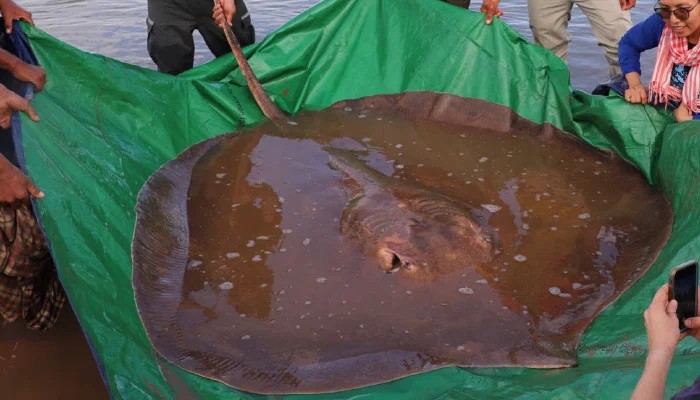
Large numbers of stingrays are being hunted along Karachi's coast, raising concerns among experts over a potential threat to their population. Locally known as pittan, the stingrays are being caught in large numbers as fishermen cast nets close to the shore instead of venturing into deeper waters. Experts have cited several reasons for the stingrays' presence near the coast. Strong sea waves during the monsoon are one factor, while another is their movement towards shallow waters to breed.
According to the experts, stingrays may also move closer to shore to avoid larger predators found in deeper waters and to protect themselves and their young. Their colour closely resembles coastal sand, allowing them to camouflage themselves and remain difficult to spot. Stingrays also come closer to the shore in search of food. During the monsoon, cockles and other shellfish are washed ashore, while ghost crabs along the coast are another source of food.
A significant increase in stingray populations has been observed in the waters of Sindh and Balochistan, according to the report. However, experts have warned that continued large-scale hunting could pose a serious threat to their population, particularly if stingrays are being caught during their breeding season. The coastal environment also faces pressure from pollution, with plastic bottles, wrappers and other waste visible along the shoreline.
Technical Adviser WWF-Pakistan Moazzam Khan, in a statement earlier, said large-scale hunting of stingrays was taking place along the coasts of Karachi and Balochistan. An increase in the stingray population had been observed over the past few years, he added. Khan said stingrays with leopard-like markings could face a risk of local extinction, noting that they are exported to Thailand, Malaysia and Indonesia.