
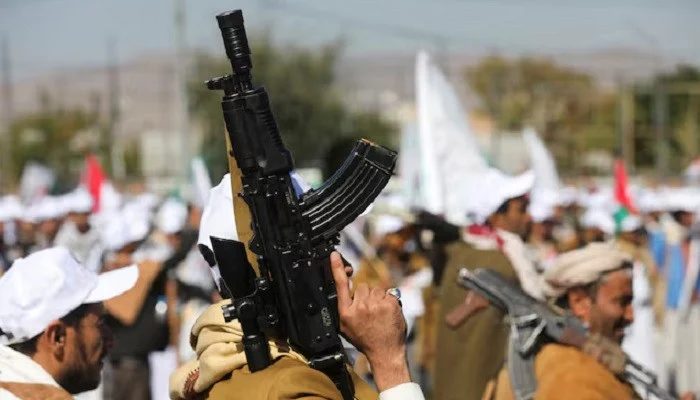
A Houthi official on Monday warned the United States it would face a "painful response" if it entered the war in Yemen, where Saudi Arabia has reportedly sought Washington's help in countering repeated attacks by the group. Yemen's civil war, in which a Saudi-led military coalition supports the government against the Iran-backed Houthis, reignited in July, months into a wider regional conflict that has roiled energy markets and plunged the Middle East into crisis.
The Houthis quickly began targeting Saudi oil facilities, tankers and transport hubs, including a series of deadly strikes on Riyadh's airport, shaking the world's top oil exporter. Explosions were heard over the Saudi capital again on Monday night.
The Saudi-led coalition said it had intercepted a Houthi missile, while the group said it had again targeted the airport. Later, the coalition announced it had intercepted two ballistic missiles in the south of the kingdom, near the border with Yemen.
In a statement posted on X, the coalition said it had "intercepted and destroyed two ballistic missiles launched by the terrorist Houthi militia towards Khamis Mushait", a city where a Saudi military base has previously come under attack. Following a strike on Riyadh airport on Saturday that killed 13 people, US President Donald Trump said he was considering joining Saudi strikes against the Houthis, after reportedly rebuffing previous requests for assistance from the kingdom.
"The Houthis are misbehaving very badly. They're misbehaving very badly.
No good," Trump said on Monday. "If the US becomes involved in the aggression against Yemen, we will not deliberate over the decision to respond; rather, there will be a swift and painful response targeting the US and all its interests in the region," Houthi political bureau member Mohammed Al-Bukhaiti told media.
He also warned, "all employees and workers at Saudi oil facilities and airports to stay away from these sites, as they have become legitimate targets." Saturday's strike on King Khalid International Airport was the deadliest attack on Saudi soil in more than a decade and left hundreds wounded.
Trump described the attack as "not acceptable" and said he would speak to Saudi Arabia's de facto leader, Crown Prince Mohammed bin Salman. He told reporters that Washington was "going to look at" the possibility of joining Saudi strikes.
Operations remained suspended at the sprawling airport on the outskirts of Riyadh on Monday. Bukhaiti said the campaign against Saudi targets was intended to send a message to the crown prince "that he can no longer wage aggression against Yemen from a safe position."
Saudi Energy Minister Prince Abdulaziz bin Salman told a conference in Riyadh on Monday that recent events had "tested our infrastructure, our institutions, our people, and our resilience." "The events of recent weeks are serious, our response must be equally serious," he said.
CCTV footage of Saturday's attack released by Saudi authorities showed Muslim pilgrims in religious attire waiting in departure lounges before a sudden blast tore through the building and brought down flaming debris. The atmosphere in Riyadh remained tense on Monday, as state broadcaster Al Ekhbariya reported that the military coalition was responding to drone and missile threats.
In the evening, mobile phones received a loud government alert.