
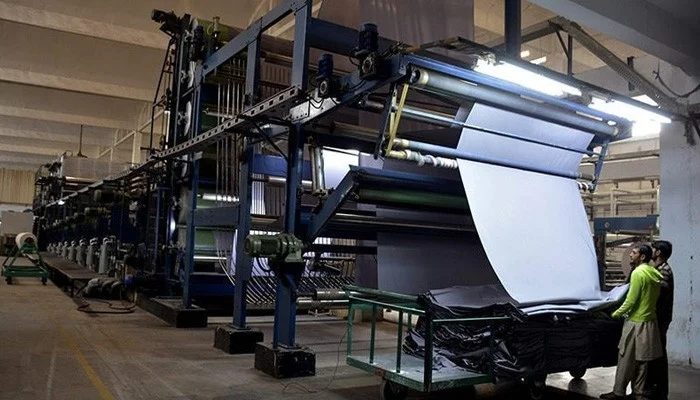
FAISALABAD: The Ministry of Commerce's emergency meeting scheduled for Tuesday (today) has assumed critical importance as textile exporters warn that high energy costs, around Rs600 billion in pending tax refunds and duty drawbacks, financing constraints, and logistical bottlenecks could trigger a further decline in exports and deepen the crisis facing the country's textile industry.
The exporters have urged the government to take concrete decisions to address their concerns, warning that continued delays in resolving these issues could undermine industrial competitiveness, disrupt production, force factory closures, and lead to job losses. The meeting has been convened following a letter from the Pakistan Textile Exporters Association (PTEA) highlighting the challenges confronting the export sector.
It will bring together senior officials from the ministries of finance, energy, petroleum, and maritime affairs, the State Bank of Pakistan (SBP), the Federal Board of Revenue (FBR), the Punjab government, and representative organisations of textile exporters. Industry representatives fear a significant decline in textile exports during the second quarter of the 2026-27 fiscal year if immediate corrective measures are not taken.
One of their major concerns is the burden of energy tariffs, particularly cross-subsidies that they say are undermining industrial competitiveness. According to industry estimates, B1 and B2 electricity consumers contribute approximately Rs56 billion annually in cross-subsidies to B3 and B4 consumers.
Exporters have also objected to the gas tariff levy, which they claim is around 20 per cent higher than the peak-hour electricity tariff applicable for four hours. They have further challenged the recovery of eight per cent in Unaccounted-for Gas (UFG) charges to cover gas losses, claiming that actual losses are below 0.50 per cent.
To improve industrial efficiency and reduce production costs, the exporters have called for a uniform average energy tariff across all consumer categories. They argue that such a measure would encourage the operation of captive power plants installed in industrial units and help boost production.
The liquidity crunch caused by delayed government payments is another major concern. The industry estimates that approximately Rs600 billion in regular and deferred sales tax refunds, income tax refunds, and duty drawbacks remain outstanding.
The prolonged delays, exporters say, have restricted their ability to finance production, purchase raw materials, and fulfil export orders. Logistical constraints are also adding to the pressure on the sector.
Exporters have called for effective regulation of sea freight and transshipment arrangements, pointing out that containers shipped from Pakistan take approximately 73 days to reach the United States. They describe this as the longest transit time in the region, putting Pakistani exporters at a disadvantage against competing suppliers.
Nearly 90 per cent of export cargo is transported to ports by road, according to industry representatives, adding to transportation costs, shipment delays, and pressure on the country's road infrastructure. The industry has urged the government to shift a substantial portion of export cargo to railways, which it considers a faster and more economical alternative.
It has proposed daily cargo train services from Faisalabad, Lahore, and Multan to improve connectivity with ports and ensure the timely delivery of export consignments.