
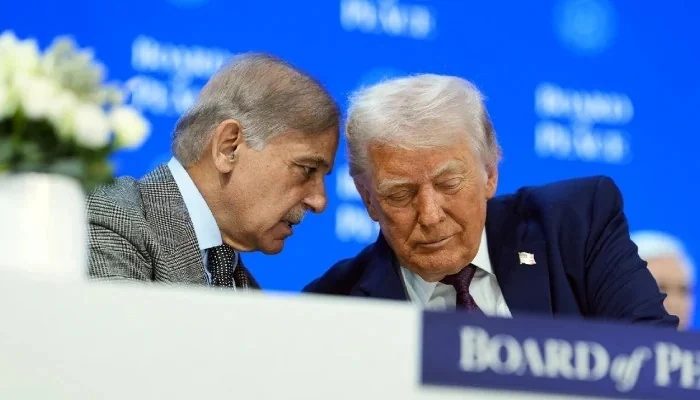
Pakistan's relationship with the US cannot be read through the results of a single American election. Yet the midterm results have prompted speculation that relations could slide from the diplomatic highs associated with President Donald Trump.
This concern draws much of its force from his highly visible engagements with Pakistan's civilian and military leadership. It deserves examination, but visibility alone is an insufficient measure of a relationship's strength or its vulnerability.
Democratic control of Congress changes the environment in which Trump operates but does not change the occupant of the White House. Nor does it automatically replace the administration's foreign policy or remove the interests sustaining engagement with Islamabad.
The more useful question is whether those interests have materially changed. Congress remains consequential.
It controls appropriations, passes legislation and conducts oversight. A different majority can intensify scrutiny, influence assistance and complicate executive decisions.
Pakistan has navigated these distinctions for 79 years. Since diplomatic relations began in 1947, it has worked with Democratic and Republican presidents, congressional majorities of both parties and periods of divided government.
The relationship has never depended exclusively on one political configuration in Washington. The recent improvement should be understood within that history.
The period following the May 2025 India-Pakistan confrontation created opportunities for renewed engagement. Developments in the Middle East, including diplomacy concerning Gaza, added areas in which Pakistan could contribute alongside other Muslim countries.
The September 2025 White House meeting brought regional security, counterterrorism, trade and Middle Eastern diplomacy into the same conversation. Trump's personal engagement helped give this convergence momentum.
Pakistan's civilian and military leadership used that access to advance dialogue. Nevertheless, the underlying circumstances were larger than the personalities involved: regional instability, counterterrorism and the search for diplomatic partners.
It is reasonable to infer that Pakistan would have sought a similar constructive role under a different American president facing comparable circumstances. The precise access and tone might have differed, but Islamabad's incentives would have remained.
Pakistan has consistently sought workable relations with the world's leading power, particularly given concerns regarding India. English-language education, professional networks, universities, diaspora communities and American cultural influence provide enduring links.
They do not determine foreign policy, but they help explain why the relationship extends beyond official security encounters. An equally important distinction separates diplomatic warmth from material outcomes.
High-level meetings can restore confidence and create opportunities. Their value must ultimately be assessed through investment realised, market access secured, technology transferred and security cooperation delivered.
It would be inaccurate to suggest that recent engagement produced no concrete results. Pakistan secured a tariff arrangement in July 2025, while Washington designated the بی ایل اے (BLA) as a Foreign Terrorist Organisation in August 2025.
These were substantive developments. However, Pakistan's further objective is to secure action against these groups to ensure lasting stability in the region and boost bilateral trust.
The trajectory of Pakistan-US relations ultimately depends on sustained diplomatic dialogue, economic cooperation, and shared strategic goals. Both nations have recognized the importance of maintaining an open channel of communication, regardless of domestic political shifts in Washington or Islamabad.
As regional dynamics continue to evolve, pragmatic diplomacy will remain the cornerstone of this vital partnership.