
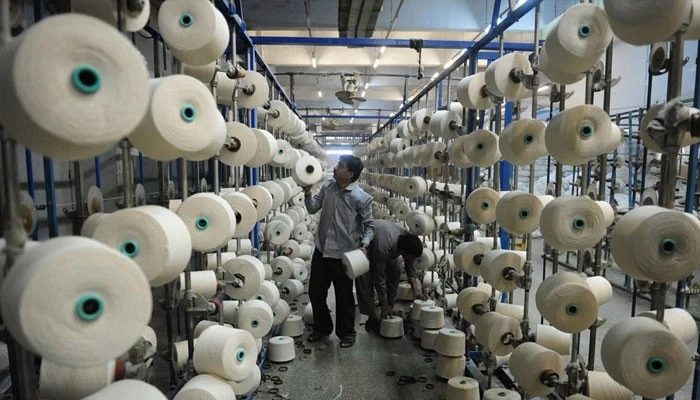
The United Kingdom and Pakistan's textile industry have explored avenues for securing tariff concessions, expanding access to British retail markets and strengthening industrial cooperation, with British High Commissioner Jane Marriott stressing the need for strict compliance with sustainability standards to enhance the competitiveness of Pakistani textile and apparel exports.
During a meeting with the leadership of All Pakistan Textile Mills Association (APTMA), Marriott underscored the importance of closer collaboration between British institutions and Pakistan's textile industry, particularly in research and development, technical expertise and specialised textiles. She encouraged APTMA members to engage British consultants and sector specialists to address industrial capacity gaps and help local manufacturers meet evolving international market requirements.
The discussions focused on translating longstanding trade ties into practical industrial partnerships that could improve product quality, strengthen manufacturing capabilities and expand opportunities for Pakistani businesses in the UK, one of the country's important export destinations for textile and apparel products. APTMA Chairman Asad Shafi described the textile and apparel industry as a principal driver of Pakistan's economy and a key avenue for deepening trade and investment relations between Islamabad and London.
He stressed that stronger institutional links with British textile laboratories, testing facilities, universities and research centres were essential to improving quality assurance, developing technical capabilities and meeting the increasingly stringent requirements of international buyers. Shafi called for a formal and actionable framework of cooperation between APTMA and relevant British institutions, arguing that structured collaboration would help move bilateral engagement beyond discussions towards measurable industrial outcomes.
The proposed framework would cover the textile value chain, including spinning, weaving, processing, garments and export-oriented home textiles. Particular emphasis was placed on technical and specialised textiles, a segment offering opportunities for higher-value production, product diversification and reduced reliance on conventional textile exports.
Collaboration with British researchers and industry experts could help Pakistani manufacturers develop specialised products, improve production processes and build the technical expertise required to compete in more demanding international markets. The participants discussed the need to build durable links between Pakistan's textile manufacturers and British academic, technical and industrial institutions, with a view to strengthening research capabilities, upgrading production standards and developing a more skilled workforce.
Shafi emphasised that a formal cooperation mechanism should identify clear areas of engagement, facilitate access to specialised expertise and establish practical initiatives capable of delivering benefits across different segments of the textile industry, further cementing trade ties through 2025 and beyond.