
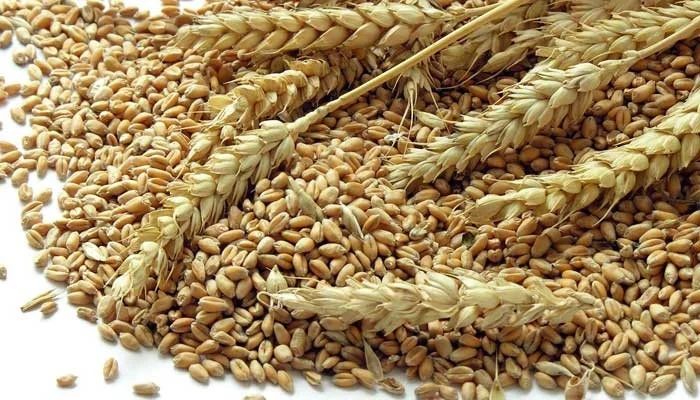
The outlook for the Rabi season appears challenging for agricultural stakeholders and national food security, as two significant obstacles converge - a severe water deficit and a delay in announcing wheat prices - just as the limited optimal sowing window approaches. Both major producing provinces, Punjab and Sindh, face a narrow wheat sowing window spanning from November 1 to November 20, with a potential extension to month-end if weather conditions permit.
However, the federal government postponed the wheat indicative price announcement on Tuesday, despite committing to establish pricing based on production expenses. This postponement may create difficulties for farmers preparing for sowing during the optimal timeframe, potentially resulting in diminished yields due to policy implementation shortcomings.
Several analysts contend that the Centre has already forfeited the opportunity to provide farmers with timely incentives through repeated delays. This situation follows years of insufficient wheat production relative to domestic demand, necessitating imports and causing substantial financial losses to farmers due to inadequate compensation.
On Tuesday, Prime Minister Shehbaz Sharif presided over the inaugural meeting of the National Agriculture and Food Security Council (NAFSC). He announced that the wheat price would be declared following provincial consultations, emphasizing that the determination must balance equitable farmer compensation with consumer affordability.
The postponement of the wheat indicative price also means wheat cultivation and production targets remain undefined. One week ago, the Federal Committee on Agriculture (FCA) convened for Rabi 2026-27 and determined that crop targets would be established only after the wheat illustrative price announcement was made.
This cascading effect of delayed price declaration results in unset targets and diminished preparation time for securing essential agricultural inputs. Beyond establishing a wheat indicative price, guaranteeing reliable returns to wheat growers is equally critical.
The Centre has dissolved the Pakistan Agricultural Storage & Services Corporation Limited (Passco), while Punjab neglected to mobilize aggregators promptly during the previous season, resulting in extremely low procurement against the target, and Sindh also grossly underperformed in procuring wheat from growers. Consequently, even with an announced price, there remains no mechanism to guarantee its implementation.
With formal planting commencing in a couple of weeks, the window for action is rapidly closing. Water availability represents another significant challenge.
The Indus River System Authority (Irsa) has notified the Federal Committee on Agriculture (FCA) that based on rim station inflows of 21.268 MAF, Punjab and Sindh will experience a 22 percent water deficit this season.