
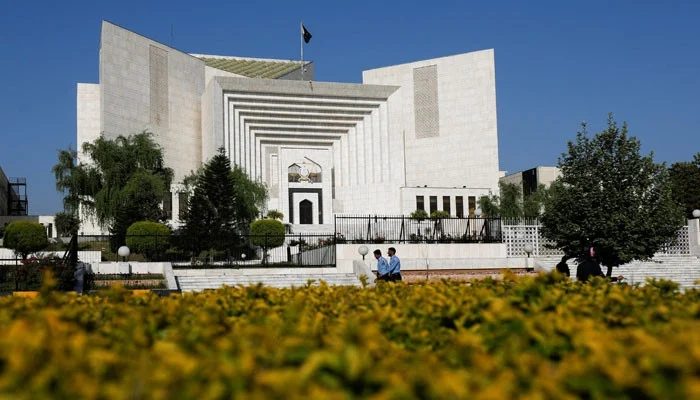
The Supreme Court on Tuesday ruled that an employee's seniority could not be altered without hearing them, even if the seniority was granted in violation of rules. In a judgment authored by Justice Muhammad Ali Mazhar regarding a service-related case involving Sindh Police personnel, the court withdrew its April 4, 2024, order, partially allowed the appeals filed by the affected personnel, and set aside the Services Tribunal's decision.
The court clarified that seniority is a valuable right of an employee, upon which their career and prospects for promotion depend. The court held that changing an employee's seniority without a hearing violates Article 10-A of the Constitution, which guarantees the right to a fair trial, as well as fundamental principles of justice.
The previous bench of the court had not heard the affected employees. "Although seniority does not guarantee automatic promotion and must be determined in accordance with the relevant law, transparency in the procedure is essential," the court observed.
The court directed Sindh Police authorities to personally hear the applicants and other affected individuals and issue a fresh, reasoned decision. It ordered that a new seniority list be issued within two months of receiving the judgment.
The court clarified that if objections are found valid and the previous alteration is determined to be unlawful, a revised list must be published. It held that until the new decision is reached, the seniority list dated November 18, 2020, will remain in force with respect to the applicants concerned.
Legal experts have lauded the decision, noting that it reinforces the principle of 'audi alteram partem' - the right to be heard - within the administrative and service structures of Pakistan. By mandating a personal hearing, the Supreme Court has ensured that bureaucratic decisions affecting livelihoods are subject to judicial scrutiny and procedural fairness.
The case highlights the ongoing challenges within provincial departments regarding the maintenance of service records. Often, arbitrary changes to seniority lists lead to protracted litigation, which burdens the judicial system and demoralizes the workforce.
The Sindh Police department is now expected to establish a transparent mechanism to review these grievances. The two-month deadline set by the apex court serves as a strict timeline to ensure that the affected officers receive timely justice.
This ruling is expected to serve as a precedent for other service tribunals across the country, emphasizing that administrative convenience cannot override the constitutional rights of public servants. The Supreme Court's insistence on a reasoned decision ensures that the authorities cannot act in a vacuum, requiring them to document the rationale behind any future adjustments to seniority rankings.