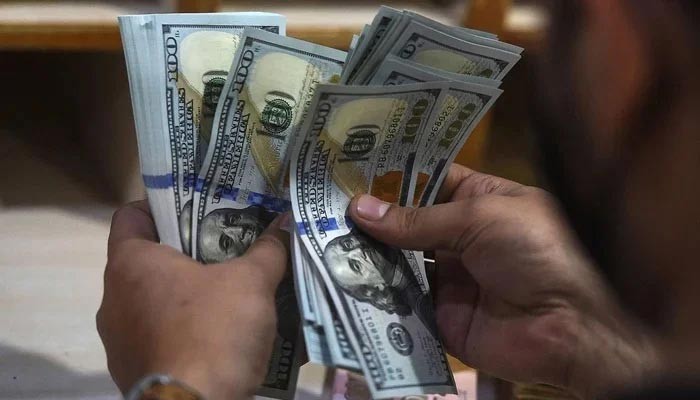
Pakistan received $3.6 billion in workers' remittances in July 2026, with Saudi Arabia remaining the largest source of inflows at $913.9 million, according to the State Bank of Pakistan.
In a statement, the central bank said that workers' remittances reached $3.6 billion in July 2026, rising 13 per cent on a year-on-year basis and 4.5pc on a month-on-month basis. Saudi Arabia remained the largest remittance corridor, contributing $913.9 million, followed by the UAE at $737.3 million, the UK at $555.5 million and the USA at $317.2 million.
Prime Minister Shehbaz Sharif on Monday expressed satisfaction over the receipt of $3.6 billion in remittances from overseas Pakistanis in July 2026. "Remittances sent by overseas Pakistanis increased by 13pc year-on-year in July 2026, which is highly encouraging," the prime minister said in a statement issued by the PM Office. He said remittances from overseas Pakistanis also increased by 4.5pc month-on-month in July 2026. "The consistent and positive contribution of overseas Pakistanis to the stability and growth of the national economy is highly commendable," the prime minister pointed out, adding that overseas Pakistanis were a valuable and integral part of the national economic mainstream.
Topline Research said Pakistan's remittances for July stood at $3.6 billion, up 13pc year-on-year, projecting full-year remittances for FY27 to clock in at $40.1 billion. Economist Dr Khaqan Najeeb said remittances were becoming an increasingly important source of foreign exchange at a time when the export engine remained weak. "A weak domestic economy, limited job creation and large differences in earnings abroad are encouraging more Pakistanis to seek work overseas. What leaves as labour is returning as foreign exchange," he said. He added that the inflows were helping keep Pakistan's balance of payments manageable, but cautioned that remittances were also a reminder of what weak growth costs the country. "Instead of creating enough productive jobs at home, we are increasingly exporting our labour," he noted.