
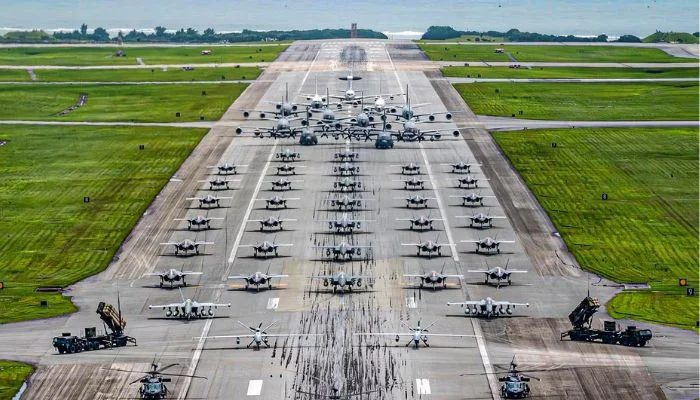
The United States military has lost or sustained damage to 81 aircraft in the war with Iran, as per the updated Congressional Research Service (CRS) report released this week. The count has nearly doubled, as 42 aircraft were reported in May.
The October 5 revision lists fixed-wing planes, helicopters, and drones lost or damaged since Operation Epic Fury started on February 28, 2026. The MQ-9 Reaper drone accounts for more than half the losses, with 45 destroyed.
As of May, the Air Force had 135 Reapers, down from 351 in 2022. The losses also include prized assets like an F-35A fighter jet damaged by Iranian ground fire on March 19, and an E-3 Sentry airborne warning aircraft hit at Prince Sultan Air Base in Saudi Arabia.
The total cost is estimated to be around $1.9 billion to $3.3 billion, depending on replacement plans. The overall war cost is even higher, with the CBO estimating about $38 billion through August 1.
The White House has requested $87.6 billion in emergency funding, which Congress has not approved. As per the report, the deadliest incident is the March 12 crash of a KC-135 Stratotanker in western Iraq, which killed all six crew.
A Navy squadron commander, Cmdr. Gabriel Edwards, was lost when an MH-60S Sea Hawk went down in the Arabian Sea on July 1.
Defense analysts point out that these heavy equipment losses highlight the unprecedented challenges faced by modern air defense systems in high-intensity regional conflicts. The sustained drone warfare tactics employed during the campaign have stretched interceptor stockpiles significantly.
Lawmakers on Capitol Hill are demanding further clarity from the Pentagon regarding the long-term sustainability of these operations. The committee hearings scheduled for next week are expected to address both the financial shortfall and strategic adjustments needed moving forward.
International observers note that the technological attrition rate in this theater exceeds expectations for modern symmetrical warfare. Military contractors are reportedly working around the clock to expedite the delivery of replacement hardware to forward-deployed units across the region.
Despite the severe matériel setbacks, strategic planners maintain that core operational objectives are being systematically achieved. The administration continues its diplomatic outreach alongside ongoing military pressure to stabilize the wider Middle East theater.