
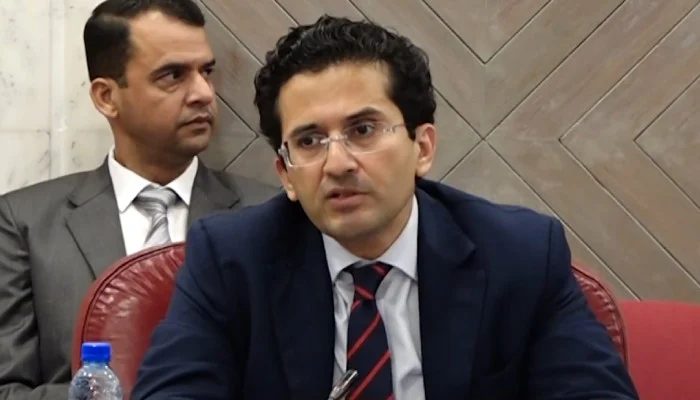
Federal Minister for Petroleum Ali Pervaiz Malik has said the government cannot change petroleum levy targets allocated in the budget without consulting its multilateral partners. The targets for the petroleum levy are allocated in the budget, and we cannot change them without our multilateral partners, Malik said during a meeting of the National Assembly Standing Committee on Petroleum.
Committee Chairman Mustafa Mahmood said diesel availability was more important than petrol as agriculture and goods transport were dependent on the fuel. Why is there such a high levy on petrol and diesel? committee member Saif-ul-Mulook Khokhar asked, describing the levy as a very heavy burden on the public and an easy means of tax collection.
Malik said regional tensions had affected the supply of petrol, diesel and crude oil, describing the resulting disruption as a major crisis. The world has never seen diesel this expensive, the minister said, adding that the government was aware of the public's difficulties in these testing times.
He noted that the petroleum levy was a form of non-tax revenue. Meanwhile, Pakistan Peoples Party (PPP) leader Naveed Qamar pointed out that parliamentarians did not vote on the levy because it remained under executive control.
The levy is there, and it is Rs 80, Malik responded, adding that all relevant information was available on the Oil and Gas Regulatory Authority (OGRA) website. Qamar questioned why the government was involved in determining petroleum product prices, noting shifts from a 30-day pricing formula to a 15-day formula and subsequently toward daily pricing.
Malik clarified that OGRA determined petroleum product prices independently. If the diesel price were Rs 600 per litre today, there would have been an uproar, he said, adding that the government had improved the supply chain and curbed profiteering across the country.
The minister stated that roughly 70% of diesel was refined locally, while the Pak-Arab Refinery Company (PARCO) was operating at full capacity. Pakistan Refinery was operating at 84% capacity and National Refinery at 85%, he added during the detailed briefing.
Malik shared that four refineries had signed agreements to produce Euro V-compliant fuel, while talks were ongoing with another refinery. He concluded that the government was actively implementing a winter plan on a daily basis and had ensured uninterrupted gas supplies to domestic consumers during meal times despite difficult conditions.
The fuel supply chain is being completely digitalised to ensure transparency and prevent any kind of artificial shortages, Malik concluded.