
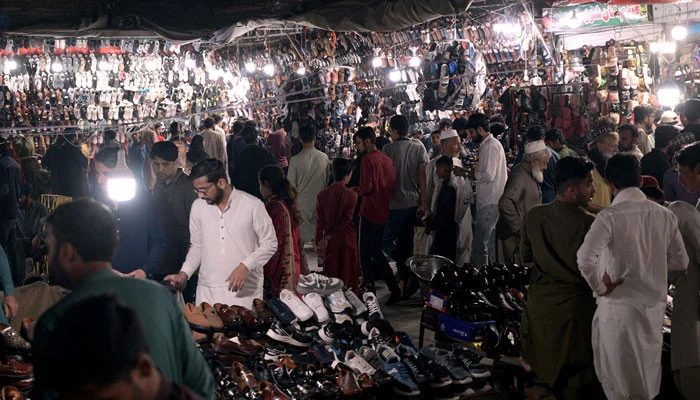
Long before the day properly begins, Raja Bazaar is already awake. Shutters rise one after another.
Shopkeepers sweep the pavements outside their stores, tea stalls begin serving their first cups, and carts loaded with vegetables, fruit, and household goods squeeze into the narrow streets. Within hours, the old commercial heart of Rawalpindi is transformed into a restless stream of shoppers, workers, vendors, and commuters.
For generations, Raja Bazaar has been more than a marketplace. It is a world of its own - a place where commerce, history, and everyday life exist side by side.
Its narrow lanes tell the story of a changing city. Traditional shops stand beside modern businesses; old buildings overlook crowded streets; and small workshops continue trades that have survived despite the arrival of shopping centers and online commerce.
The bazaar's importance is not simply measured by the number of shops; it is the network of people who depend on it. A wholesaler supplies a retailer, a porter moves goods through congested lanes, a tea seller serves exhausted shoppers, and a small shopkeeper relies on regular customers who may have been visiting the area for decades.
At peak hours, movement becomes an art. Motorcycles, handcarts, pedestrians, and delivery vehicles compete for every available inch.
For visitors, the congestion can be overwhelming, but for those who work here, it is part of the daily rhythm. "People come here not only to buy things," says a shopkeeper, watching the flow of customers outside his store.
"They come because this place has everything." That sense of completeness is one of Raja Bazaar's defining characteristics. From clothing and shoes to groceries, books, electronics, household goods, and traditional items, the market serves customers from Rawalpindi and surrounding areas.
It is a hub that bridges the gap between the past and the present. The bazaar is also a record of time.
Older shopkeepers remember when the streets were quieter and commercial activity was more concentrated. Younger traders speak of changing consumer habits, rising costs, and competition from larger shopping malls and online stores.
Yet, the bazaar continues to adapt to the modern era. Its resilience lies partly in its personal relationships.
Customers often know shopkeepers by name. Bargaining remains a core part of the experience; a purchase can become a conversation, and a routine visit can turn into an exchange of news about the neighborhood.
This human connection is what keeps the heart of Rawalpindi beating. As the sun sets, the intensity of the bazaar shifts but does not fade.
The lights flicker on, and the evening crowd replaces the morning rush. Even as the city expands and new commercial zones emerge, Raja Bazaar remains the anchor of Rawalpindi's identity.
It is a testament to the endurance of traditional trade in a rapidly digitizing world. While technology changes how we shop, the need for a physical space where community and commerce intersect remains as strong as ever.
Ultimately, Raja Bazaar is not just a location on a map; it is a living, breathing entity that reflects the spirit of its people. It is a city within a city, forever evolving yet deeply rooted in its history.