
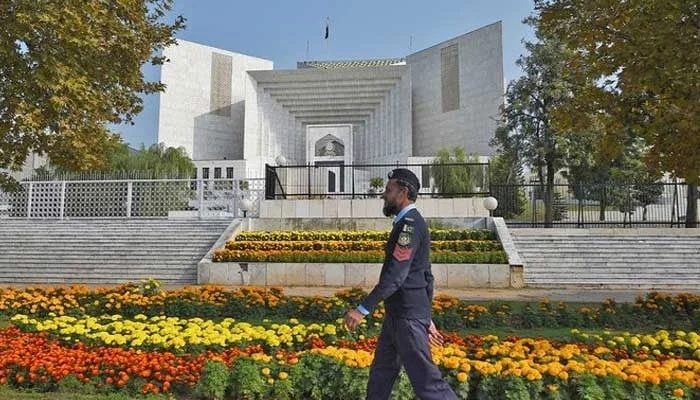
The Supreme Court has upheld the eviction of five Karachi-based companies, ruling that a rent controller is not barred from considering events occurring during ejectment proceedings if they are supported by the available record. A two-member bench comprising Chief Justice Yahya Afridi and Justice Muhammad Shafi Siddiqui dismissed the companies' appeals against Sindh High Court judgments dated June 19, 2026, refusing leave to appeal and finding no legal error warranting interference with the eviction orders.
The appeals were filed by M/s Universal Express (Pvt) Limited, M/s Al-Kiswa (Pvt) Limited, Topline Travels (Pvt) Limited, M/s Fazal-e-Rabbi (Pvt) Limited, and M/s Executive Aviation (Pvt) Limited against their landlord, Karachi Properties Investment Company (Pvt) Limited. The landlord had sought their eviction under the Sindh Rented Premises Ordinance, 1979, primarily on grounds of rent default, non-payment of maintenance charges, and impairment of the building's material value and utility.
In a nine-page judgment authored by Justice Muhammad Shafi Siddiqui, the court held that the law did not require a rent controller to ignore subsequent events during the pendency of ejectment proceedings. "For the foregoing reasons, we are of the considered view that the impugned judgments of the High Court maintaining the orders of ejectment do not call for interference," the judgment stated.
The court referred to its earlier ruling in the case of Mst. Amina Begum, in which it recognized that subsequent events could, in appropriate cases, be considered to avoid multiple proceedings, shorten litigation, and mould relief in light of changed circumstances.
"It would, therefore, be incorrect to hold, as an absolute proposition, that un-pleaded default in payment of rent can never be taken into consideration," the court observed. The tenants had argued that the Rent Controller and the High Court had gone beyond the pleadings by considering alleged rent defaults during the ejectment proceedings, particularly non-payment of rent for May and June 2020.
They maintained that these defaults had not been pleaded in the original eviction applications and could not be treated as an independent ground for ejectment, especially in the absence of a tentative rent order under Section 16(1) of the Ordinance. The Supreme Court, however, noted that the courts below had examined the rent schedules, receipts, and evidence produced by the parties before concluding that the tenants had defaulted on rent or made short or delayed payments.
It observed that rent was payable in advance and found no sufficient basis to overturn the concurrent factual findings. The judgment also addressed the dispute over enhanced rent.
It noted that the enhanced amount had been paid for January 2018 and acknowledged by the parties, while short payments had been made for February and March that year. The court observed that there was no contemporaneous record showing that the tenants had objected to the enhanced rent or informed the landlord that they disputed the revised amount agreed under the tenancy agreements.
"Needless to mention that such terms not opposed by the ordinance would continue to operate whether it be of advance rent and/or enhanced rent (not exceeding 10%)," the judgment stated.