
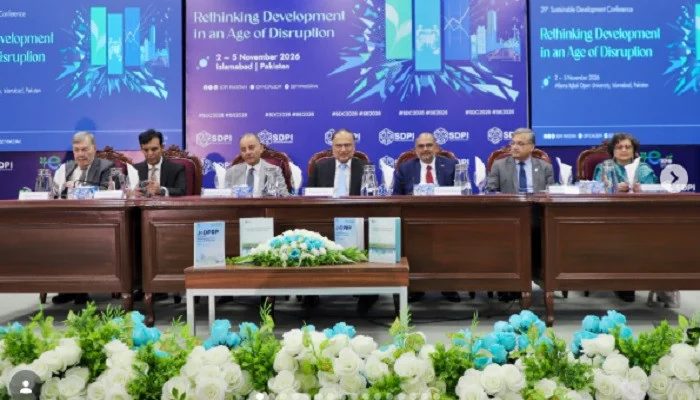
Women empowerment programmes must go beyond training to connect women with jobs, market opportunities, and access to finance, while recognising their care responsibilities, experts said on Saturday at the 29th Sustainable Development Conference hosted by the Sustainable Development Policy Institute (SDPI). Chairing a session on women's skills and livelihoods, MNA Shaista Pervaiz Malik identified industry-relevant skills, public safety, market linkages, and access to capital as key priorities for increasing women's economic participation.
Rehan Saeed, Executive General Manager and CEO of L'Oréal Pakistan, said women account for about half of the country's population, yet their labour force participation remains around 24pc. Sharing the company's experience with community impact programmes, he stressed that skills development initiatives were most valuable when linked to employment, mentorship, and business support.
Dr Najma Afzal, Punjab's Women Ombudsperson, acknowledged L'Oréal's initiatives in vocational beauty skills, digital and financial literacy, and addressing street harassment, noting their contribution to women's dignity and economic independence. She called for effective enforcement of workplace harassment laws and urged government institutions to lead by example, including by ensuring confidence in grievance redressal mechanisms.
Dr Rakhshinda Perveen, a public health and gender justice expert, said there was an urgent need to overcome the legal, institutional, social, and economic barriers that restrict women's participation in the workforce. UNDP Deputy Resident Representative Van Nguyen cited the success of an initiative in Vietnam that supports women micro-entrepreneurs through 100 cooperatives, linking them with digital tools, markets, and mentoring.
Women's economic empowerment, she said, should provide them with greater security, choice, and control over their earnings. Jahan Ara Manzoor Wattoo, former vice chairperson of the Punjab Social Protection Authority, presented the Khud Mukhtar programme as an example of grassroots support.
It provides young married couples with productive assets worth up to Rs150,000, including livestock, tools, and business equipment, aiming to foster sustainable economic growth at the family level.