
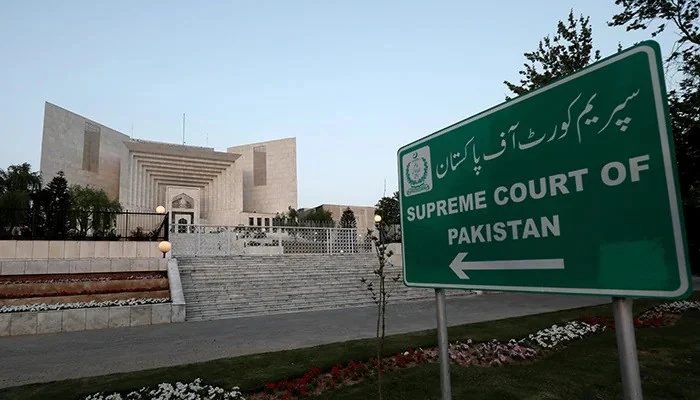
The Supreme Court (SC) has ruled that dismissal in default of a case due to the negligence of an advocate without well-grounded justification is one of the most serious blemishes that disparages and tarnishes professional image and reputation. A three-member bench, headed by Justice Muhammad Ali Mazhar and comprising Justice Musarrat Hilali and Justice Shahid Bilal Hassan, announced the judgment in a case related to the dismissal of revision petitions for non-prosecution.
The case is titled Safdar Ali Butt versus Faisalabad Development Authority. The petitioner, Safdar Ali, had filed petitions for leave to appeal against the order dated February 23, 2026, passed by the Lahore High Court, whereby Civil Miscellaneous Applications filed by the petitioner for the restoration of Civil Revision Nos. 1717/2016 and 1718/2016 were dismissed.
Petitioner's counsel contended that both civil revisions were dismissed for non-prosecution on February 2, while restoration pleas were promptly filed on February 3. He submitted that the petitioner's counsel was afflicted with Covid-19 and could not reach the court in time due to heavy traffic congestion.
The Supreme Court, after hearing the case at length, allowed the appeals, set aside the impugned orders, and allowed the restoration applications moved in the High Court in Civil Revision Nos. 1717/2016 and 1718/2016, restoring both revision applications to their original position subject to the payment of a cost of Rs. 10,000.
The court expressed hope that the High Court would proceed with the civil revisions expeditiously and decide the matter at the earliest. Similarly, the court directed the petitioner to ensure representation on every single date of hearing and refrain from seeking unnecessary adjournments to prolong the proceedings.
The court noted that adjudication of cases cannot be permitted to rest on hyper-technical considerations alone. "Therefore, in our considered view, the impugned order appears to be harsh," the court held, adding that the interests of justice require the petitioner to be afforded at least one fair opportunity to pursue the matter on merits, consistent with the constitutional mandate of a fair trial and due process under Article 10A of the Constitution.
The court observed that if an advocate lacks a sense of professional duty, the ultimate sufferer is the client; however, at the same time, the client should also remain vigilant and pursue their case diligently. This ruling is expected to provide substantial relief to litigants facing hardships due to legal oversights.
Legal experts have welcomed the decision, stating that it reinforces the fundamental right to justice without letting technicalities override substantive fairness. The Supreme Court emphasized that procedural lapses by counsels should not permanently shut the doors of justice for ordinary citizens.
Furthermore, the apex court reiterated that while courts must maintain discipline, strict punitive measures like dismissing a suit without examining the core issues should be a last resort. The case has now been remanded back for proper progression in accordance with the law.