
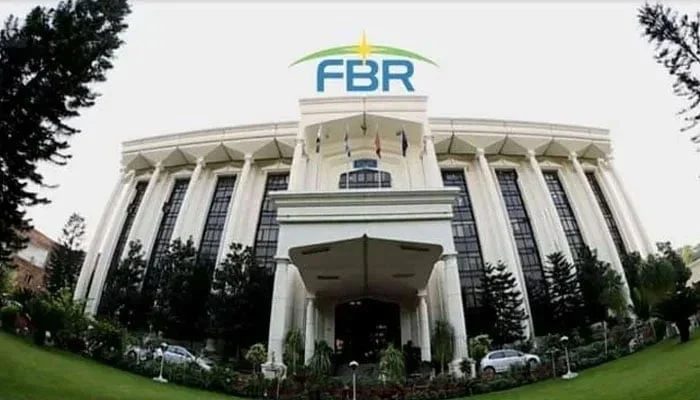
With Prime Minister Shehbaz Sharif issuing fresh directives to revamp and restructure the Federal Board of Revenue (FBR), sources said the tax machinery requires complete autonomy, free from interference based on personal likes and dislikes, to ensure the smooth functioning of the national economy.
Top official sources confirmed that the Central Board of Revenue (CBR) was previously renamed the FBR, and two main groups were formed within the tax machinery: the Inland Revenue Service (IRS), created by merging Income Tax and Sales Tax along with Federal Excise Duty, and the Customs Group.
Recently, a new operating model was enacted through an act of parliament, with the promise that the transformation plan would achieve desired results. Just a few years ago, FBR officials were categorised into A, B, C and D grades.
Those placed in the lowest grades on the basis of intelligence reports, and those made officers on special duty (OSDs), were still working as OSDs. Subsequently, the Transformation Plan was approved, and the World Bank and Asian Development Bank provided loans worth millions of dollars.
Despite that, the FBR's performance remained below the desired level. Last week, at a high-level meeting at the Prime Minister's Office, a proposal to abolish the FBR and establish a new tax collection agency was considered, triggering a debate within the tax collection machinery.
The PMO directed the FBR to make a presentation outlining a comprehensive proposal for human resource (HR) reforms and the revamping and restructuring of the FBR. The FBR will also brief the meeting on the tobacco sector.
The FBR has been facing difficulties in generating desired revenue from domestic-stage Sales Tax, resulting in increased criticism of the tax machinery's capacity to perform. Independent tax experts observed that, on the one hand, the FBR was being asked to collect taxes, while, on the other, certain privileged sectors and individuals remained beyond the reach of the tax machinery.
They questioned how the tax machinery could perform effectively under such a fragmented approach. "Without granting autonomy to the FBR, freeing it from political interference and providing a constitutional guarantee for the tenure of its top leadership, restructuring or revamping will never deliver the desired results."
One proposal is to separate the IRS and Customs into distinct entities. However, independent tax experts argued that such a move would not improve the tax system and would instead serve the interests of a few officers seeking standalone organisations with full powers under their respective jurisdictions.