
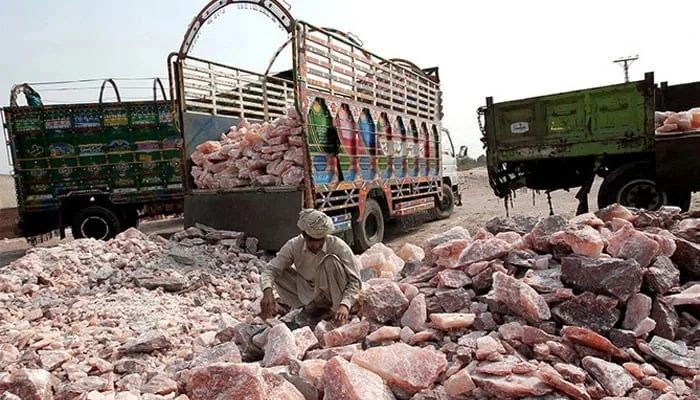
Pakistan is stepping up efforts to turn its vast mineral resources into a major source of exports, foreign investment and industrial growth, with the Reko Diq copper and gold project, a proposed US minerals partnership and the upcoming Pakistan Minerals Investment Forum 2026 (PMIF26) at the centre of its strategy.
The Pakistan Minerals Investment Forum (PMIF) is the government's flagship platform for promoting investment in the country's mineral sector and connecting Pakistan with global investors, mining companies, financial institutions and technology providers. The forum brings together policymakers and industry leaders to showcase Pakistan's mineral potential, facilitate partnerships and investment, and promote sustainable development and value addition across the sector.
Last year's edition of the Pakistan Minerals Investment Forum (PMIF25) attracted 5,000 delegates from more than 50 countries. The event saw the signing of 16 memoranda of understanding and featured 18 panel discussions.
The 2026 edition, PMIF26, was originally set for April 8-9 at the Jinnah Convention Centre in Islamabad but was rescheduled to November 12-13, 2026, at the same venue. Federal Minister for Energy (Petroleum Division) Ali Pervaiz Malik has said the forum is designed to promote mining awareness and attract sustainable investment, arguing that Pakistan's mineral wealth has for decades gone largely unexplored.
The investment-focused platform connects governments, investors, mining companies, technology providers and other stakeholders across the mineral value chain. PMIF26 is expected to focus more heavily on project development, exploration, technology, value addition and investment.
Its technical programme includes geological exploration and resource assessment, remote sensing, geophysics and other technologies intended to strengthen understanding of Pakistan's mineral geology. The country's mineral potential is attracting renewed interest amid rising global demand for copper, gold, rare earth elements and other critical minerals used in electrification, advanced manufacturing and digital infrastructure.
According to the Institute of Cost and Management Accountants of Pakistan (ICMA), the country has 92 known minerals, of which 52 are commercially exploited. Despite estimated mineral reserves of around $8 trillion, the sector has historically contributed less than 3 percent to gross domestic product (GDP).
At the heart of the government's strategy is Reko Diq in Balochistan's Chagai district, one of the world's largest undeveloped copper and gold deposits. The project is jointly owned by Barrick Mining Corporation, with a 50 percent stake, the Balochistan government with 25 percent, and three federal state-owned enterprises holding the remaining 25 percent collectively.
Barrick's updated feasibility study, completed in February 2025, estimated total capital investment at $8.83 billion and a mine life of 37 years. First production is targeted for the end of 2028.
The first phase is designed to process 45 million tonnes of ore annually, producing an estimated 240,000 tonnes of copper and 297,000 ounces of gold a year. A second phase, planned for 2034, would double processing capacity.
The project could generate substantial export earnings, government revenues and employment while creating opportunities for domestic engineering, transport and mining services.