
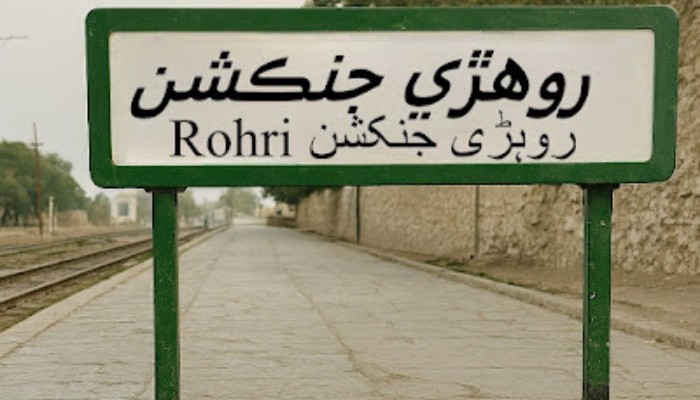
After China declined to finance the entire Main Line-1 (ML-1) project, Pakistan is exploring private investment options to upgrade the Rohri-Multan railway section at an estimated cost of over Rs450 billion. The first phase of ML-1, spanning from Karachi to Rohri/Sukkur, will be financed by international creditors including the Asian Development Bank (ADB) at an estimated cost of $2.5 billion. Civil works for phase one are targeted to begin in January 2027, while co-financing options are also being evaluated with other global lenders, such as the World Bank, Asian Infrastructure Investment Bank (AIIB) and Islamic Development Bank.
According to official announcements from the Ministry of Planning, Federal Minister for Planning, Development and Special Initiatives Ahsan Iqbal chaired a meeting of the committee - constituted on the prime minister's directives to explore financing options for the Rohri-Multan section of the ML-1 project. He stated that modernising the ML-1 railway line remains a top priority for the government and called for a comprehensive, viable financing strategy.
The meeting reviewed various funding mechanisms, including the Public Sector Development Programme (PSDP), foreign loans, public-private partnerships, local commercial banks, and domestic capital markets. The committee also deliberated on a firm financial blueprint and received a briefing on a proposal by the Frontier Works Organization (FWO) to develop the Rohri-Multan section through private investment.
Participants were informed that the estimated cost of the Rohri-Multan section exceeds Rs450 billion. Officials were briefed on the deteriorated state of the infrastructure, noting that poor track conditions over the past decade led to 399 derailments and 158 other train accidents.
The minister announced that work on the Karachi-Rohri section, backed by ADB financing, will commence during the current fiscal year, directing authorities to complete preparatory measures promptly. For the Rohri-Multan section, Ahsan ordered a comprehensive feasibility study by a credible, independent third party to evaluate its technical, financial, and economic viability.