
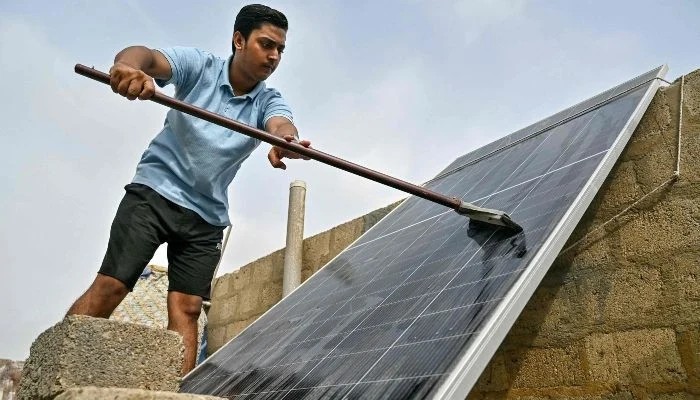
Pakistan's shift to net billing is creating fresh challenges for solar financing, pushing consumers to smaller systems and battery storage amid lower returns on excess electricity and higher borrowing and insurance costs, bankers and analysts said. The regulatory transition from 'net metering' to 'net billing' has changed the economics of the country's rapidly expanding rooftop solar market. Under the new framework introduced by the National Electric Power Regulatory Authority in February, consumers continue to pay full tariffs for electricity drawn from the grid while receiving a lower, market-linked rate for surplus power supplied to the grid.
"Reduced buyback rates for exported electricity lengthen the payback period for consumers", said Imtiaz Khalid, country head for SME at JS Bank. "This forces users to either downsize their systems or invest in costly battery storage to keep power local". "Higher commercial interest rates make monthly instalments steeper, making it harder for fixed-income households to qualify under standard debt-burden limits", he added. Demand for solar had surged in Pakistan as rising utility tariffs and grid instability pushed households and businesses to seek alternatives to expensive grid power, Khalid said.
While banks have the liquidity to lend, the expiry of the State Bank's subsidised refinance scheme means solar loans are now linked to commercial KIBOR rates, making borrowing costs a key factor shaping the pace of market growth, he added. JS Bank, one of Pakistan's fastest-growing lenders, has established a dedicated green banking framework and a structured renewable energy financing portfolio, offering specialised products for solar projects in the residential, commercial and agricultural sectors. The bank has financed hundreds of solar installations across the country.
Rooftop installations face severe physical risks in Pakistan, including panel damage from stray aerial firing during celebrations, localised hail, heavy rainfall and storms, according to Khalid. Solar equipment is hypothecated as bank collateral, and comprehensive insurance is mandatory, he said. A high frequency of damage claims drives up insurance premiums, adding administrative strain and extra long-term costs for both lenders and borrowers. Overall consumer lending rose to Rs1.19 trillion at the end of July from Rs1.14 trillion a month earlier, according to State Bank of Pakistan data.