
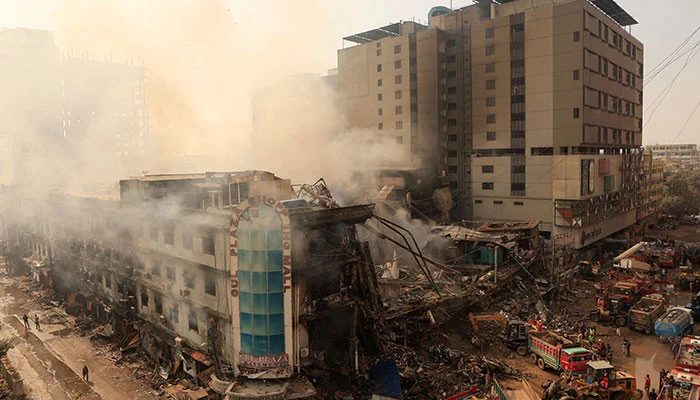
A shopkeeper on Tuesday testified before a judicial magistrate in the Gul Plaza Shopping Mall inferno case and claimed that the fire appeared to have been pre-planned. Muhammad Arif recorded his statement before Judicial Magistrate (South) Aasim Aslam under Section 164 of the Criminal Procedure Code.
He said he had been associated with Gul Plaza since 1987 and owned three shops there when the fire broke out. Arif stated that he reached the plaza at around midnight after receiving a call about the incident at 11:15 pm, and saw flames billowing out through 13 gates on the ground floor, as 12 of them were closed.
He added that he also saw a dead shopkeeper clinging to a window on the mezzanine floor. "Given the intensity of the fire, how quickly it spread, and the statements of other shopkeepers, it appears that the fire had been pre-planned," he maintained, adding that the blaze engulfed the entire plaza within half an hour.
He recalled that in 2016, 21 shops, including his office, were gutted in a fire that raged for four hours. He noted that a judicial inquiry had found that Tanveer Pasta, president of the plaza's managing committee, had not informed the fire brigade in a timely manner.
Although the building had a speaker system, people were not alerted through it, he said. He claimed that the power supply had been disconnected during the fire, making it difficult for people to find their way out.
"The video shows people kept searching for a way out, but the exits were blocked. Tanveer Pasta had got the power disconnected, which made it difficult for people to escape and led to the deaths of 72 people," Arif stated.
Arif further claimed that Pasta had sealed the route leading from the second floor to the roof, turning the area into an office, while scrap material had been placed at the door. The shopkeeper also raised questions regarding the plaza's maintenance funds.
"The five floors of Gul Plaza generated Rs10 million a month in maintenance fees," he said, adding that the plaza also earned revenue from billboards, mobile towers, and parking contracts. "Despite repeated requests, the accounts were never audited," he stressed.
He alleged that the management had failed to install an effective firefighting system and fire alarms. "All of us who owned shops have become unemployed," he lamented.
He also questioned the distribution of financial assistance announced after the tragedy, stating that the Sindh government had distributed around Rs8 billion through the chamber of commerce. Later, he was cross-examined by the defence counsel.