
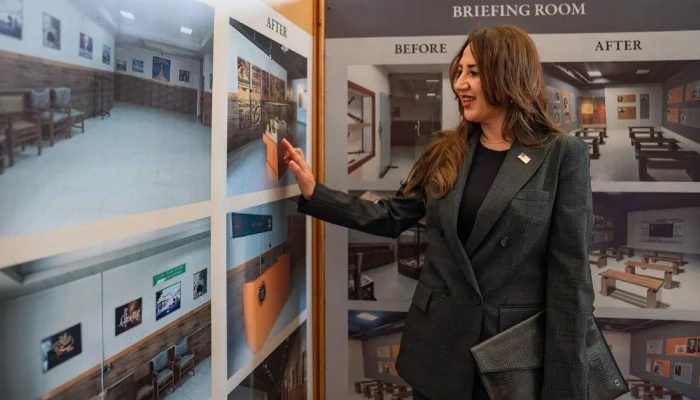
US Charge d'Affaires Natalie Baker and Balochistan Parliamentary Secretary Nawabzada Mir Muhammad Zarain Khan Magsi on Saturday marked the completion of a US-funded cultural preservation project at the Mehrgarh Museum in Quetta. The project, the first-ever initiative of the US Ambassadors Fund for Cultural Preservation (AFCP) in Balochistan, was implemented in collaboration with the Sindh Exploration and Adventure Society (SEAS) and the Balochistan Culture Department.
According to a press statement, the project preserved ancient Neolithic and archaeological artefacts from the historic Mehrgarh civilisation, upgraded museum curation to international standards, and expanded community outreach. It also included training for local heritage professionals to ensure the long-term care of the museum's collection.
Speaking at the ceremony, Baker highlighted the role of American expertise in preserving cultural heritage and strengthening ties between the peoples of Pakistan and the United States. She said the Mehrgarh Museum would showcase the 8,000-year-old Mehrgarh civilisation and other historical heritage.
During the ceremony, Baker, Magsi, and project leads Dr. Asma Ibrahim and Dr. Kaleemullah Lashari unveiled a commemorative plaque at the museum's entrance in Quetta ahead of its official reopening later this month. The initiative represents a significant milestone in bilateral cultural cooperation.
By investing in the preservation of one of the world's oldest civilisations, the United States aims to foster a deeper appreciation for the rich history of the Balochistan region. The museum's upgraded facilities are expected to attract researchers, students, and tourists from across the globe, providing them with a unique window into the Neolithic era.
The integration of modern curation techniques ensures that these fragile artefacts are protected for future generations. Local officials expressed their gratitude for the partnership, noting that the project has not only restored historical items but also empowered local staff with technical skills.
This capacity building is essential for the sustainability of cultural institutions in the province. The collaboration between SEAS and the Balochistan Culture Department serves as a model for future heritage projects.
Both parties emphasized the importance of continued support for such initiatives to maintain the integrity of Pakistan's diverse archaeological landscape. As the museum prepares for its public reopening, the focus remains on educational outreach.
Programs are being designed to engage local schools and universities, encouraging the youth to take pride in their ancestral heritage. The event concluded with a tour of the newly renovated galleries, where attendees observed the meticulous work done to display the ancient relics.
The project stands as a testament to the enduring partnership between the two nations in the realm of cultural diplomacy.