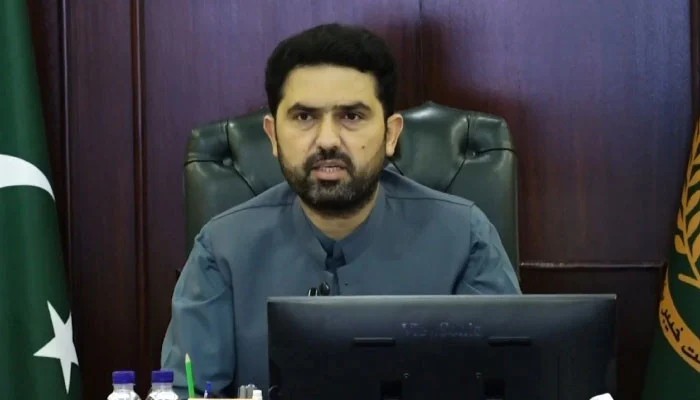
Chief Minister Muhammad Sohail Afridi said on Tuesday that Khyber Pakhtunkhwa's outstanding Net Hydel Profit (NHP) dues payable by the federal government under the AGN Kazi formula had exceeded Rs2,300 billion. "The province's hydropower, oil, gas and LPG resources are making a significant contribution to meeting the country's overall energy requirements. However, despite being a major contributor to the country's energy supply, the people of Khyber Pakhtunkhwa continue to be denied their rightful share and due benefits from the province's own resources, a situation that is no longer acceptable," he said while presiding over a meeting of the Energy and Power Department.
According to an official statement, the participants were informed that Khyber Pakhtunkhwa contributes more than 70 percent of the country's total hydropower generation to the national grid. However, in the absence of a provincial transmission line after the 18th Constitutional Amendment, the province is compelled to sell the electricity it generates to the federal government. The meeting was informed that under the earlier interim arrangement, more than Rs78 billion in regular NHP payments also remained outstanding against the federal government.
The participants were informed that despite producing more than 70 percent of the country's hydropower, Khyber Pakhtunkhwa had received less in NHP payments than Punjab. During the past three years, Khyber Pakhtunkhwa received Rs87.7 billion in NHP payments, compared with Rs160.8 billion received by Punjab. The chief minister said delays in NHP payments and disproportionate disbursements were adversely affecting the province's fiscal position.
The meeting was informed that Khyber Pakhtunkhwa had approached the Council of Common Interests (CCI) over the five percent annual indexation of NHP, outstanding arrears, late-payment surcharge and the mechanism for direct payments. The participants were informed that Khyber Pakhtunkhwa was establishing its own provincial transmission and grid system to ensure reliable electricity transmission and meet the requirements of the industrial sector. The chief minister said that despite the province's natural resources and energy production, failure to ensure that the people of Khyber Pakhtunkhwa receive their due benefits from these resources constituted a violation of their constitutional rights.