We may have some idea of how US President Donald Trump felt when he learned who was awarded this year's Nobel Peace Prize on Friday. After all, he had so passionately wanted this prize for himself.
Now, with Navi Pillay, a South African lawyer and international judge, as the recipient of the 2026 prize, the Norwegian Nobel Committee's decision is likely to be seen as an implicit rebuke of the American president and other world leaders. In any case, some reports have noted that this choice carries "distinct political undertones".
It is significant that Navi Pillay had led a United Nations Commission last year that concluded Israel had committed genocide against Palestinians in Gaza, a finding the Israeli government rejected. Consider this: just hours after the Nobel committee awarded Navi Pillay its annual honour, the Trump administration announced it was imposing severe financial sanctions on the International Criminal Court (International Cricket Council (ICC)).
Navi Pillay is a former judge of this court that seeks to prosecute those accused of war crimes, genocide and other numerous criminal acts. The US has openly been wanting to cripple this global body.
Navi Pillay concluded her brief news conference in Nuremberg, Germany, where she received the award, by saying: "You have a legal obligation to protect human rights and refrain from war". The Norwegian Nobel Committee said the international legal system was under tremendous pressure, and a shift towards 'power politics' was coming at the expense of global respect for law and justice.
In awarding this year's Nobel Peace Prize, the committee "wants to remind the world that rule of law - national and international - underpins the system we have set up to ensure peace and resolve conflicts non-violently". In its statement, the committee said: "Peace requires justice".
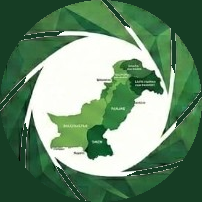
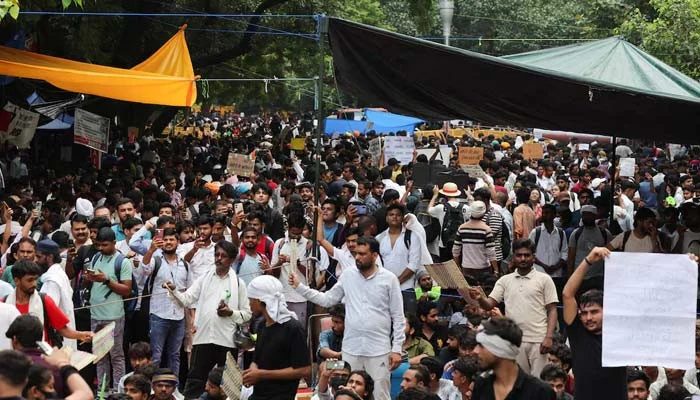
But the global situation in the context of peace and justice, as the Nobel committee has noted, is exceptionally disturbing. We, in Pakistan, are engaged in a lethal political conflict with the protest launched by the party of former prime minister Imran Khan, and there is always a chance that it could get out of hand.
At the same time, there is an increase in acts of terrorism, particularly in areas that are also politically disturbed. There is ample uncertainty about the future course of the long march, which was initially meant to reach Islamabad.
This week, it has covered some distance within Khyber Pakhtunkhwa, the province where the Pakistan Tehreek-e-Insaf (PTI) is in power. Late Friday, Chief Minister Ali Amin Gandapur invited people from across Pakistan to the Swabi Interchange on Sunday, where the PTI will reportedly announce its next plans regarding the long march's route and destination.