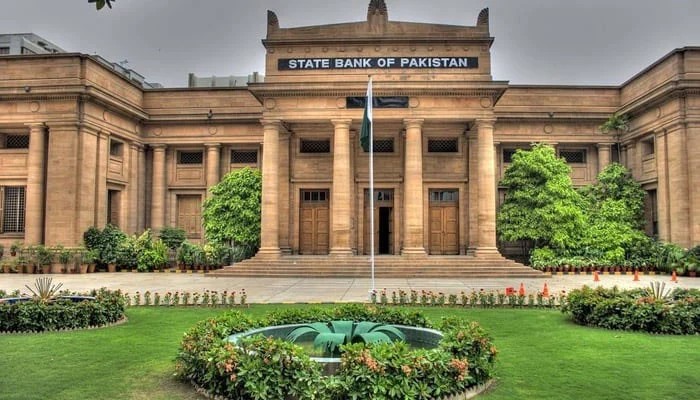
Pakistan's ambitious transition to electric mobility faces significant financing, infrastructure and implementation bottlenecks that may derail its long-term goals unless a sustainable financing model and coordinated policy execution are secured, the State Bank of Pakistan (SBP) warned in its Half-Year Economic Report. The central bank emphasised that accelerating the rollout of the National New Energy Vehicle (NEV) Policy 2025-30 is critical to shielding the economy from international oil price volatility. The transport sector currently accounts for nearly 10 per cent of Pakistan's carbon emissions, while the country faces an average annual oil import bill of $15.8 billion. Building on stakeholder consultations and lessons from the 2019 EV policy, which suffered significant delays amid pandemic-related disruptions, the new strategy seeks to promote environmental sustainability, reduce import dependence, improve energy efficiency and modernise domestic assembly lines.
Early momentum is already visible on domestic factory floors. Localised assembly of electric four-wheelers rose to 137 units in the first half of fiscal year 2025-26 (H1-FY26), from 110 units in the same period of FY25. Overall automotive production and sales also reflected a broader recovery across several segments. Total passenger-car production jumped 56.2 per cent to 74,782 units in H1-FY26, compared with 47,880 units in H1-FY25, while sales increased 41.8 per cent to 65,771 units. Cars with engine capacities of 1,300cc and above led the growth, with production rising 73.4 per cent to 36,716 units and sales increasing 72.8 per cent to 35,404 units. Economy models below 1,000cc recorded a 47.8 per cent increase in production to 35,861 units and a 17.9 per cent rise in sales to 27,846 units. The 1,000cc segment, however, saw production decline 9.5 per cent to 2,205 units despite a 10.1 per cent increase in sales to 2,521 units.
Beyond passenger cars, electric vehicle sales reached 139 units in H1-FY26, up 33.7 per cent from 104 units a year earlier. Truck and bus production surged 89.4 per cent to 3,856 units, while sales jumped 96.4 per cent to 3,532 units. Jeep and pickup production rose 36.9 per cent to 21,386 units, while sales increased 58.1 per cent to 22,412 units. Two- and three-wheelers also expanded, with production growing 32.9 per cent to 928,521 units and sales rising 32.3 per cent to 921,566 units. The tractor segment moved in the opposite direction, with production falling 19.6 per cent to 13,366 units and sales declining 25.7 per cent to 12,929 units.
To sustain the momentum, the NEV strategy focuses on four key pillars: affordability, charging infrastructure, consumer incentives and institutional coordination. Under the affordability pillar, the government aims for NEVs to account for 30 per cent of all new vehicle sales by 2030 -- equivalent to more than two million units, including 54,000 electric bikes and 100,000 electric four-wheelers. The target rises to 50-90 per cent by 2040, with the government aiming for a fully net-zero fleet by 2060. The plan also targets 90 per cent localisation within two years, backed by more than 60 manufacturing licences issued to two- and three-wheeler producers. To stimulate demand, the government is rolling out direct purchase subsidies of up to Rs65,000 for e-bikes and Rs400,000 for e-rickshaws under schemes such as PAVE. The programme has an initial allocation of Rs9 billion for 116,053 e-bikes and 3,171 e-rickshaws.