
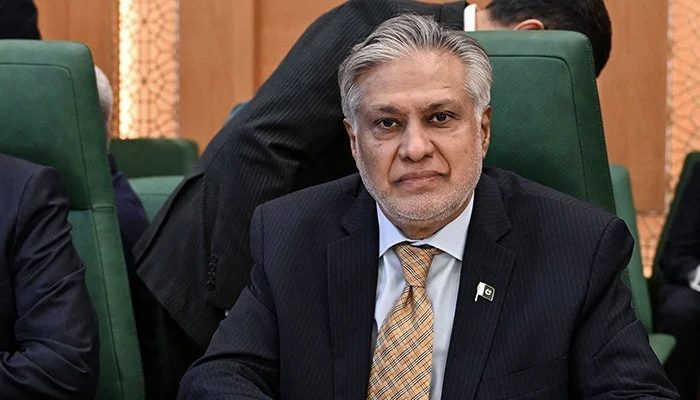
Pakistan, Egypt, and Turkiye on Thursday reaffirmed that the regional situation demands that dialogue and diplomacy remain the only way to address all issues faced by regional countries. Deputy Prime Minister and Foreign Minister Ishaq Dar held telephonic conversations with his Egyptian and Turkish counterparts.
The outreach by the two important regional capitals comes at a time when Egyptian President Abdel Fattah al-Sisi issued a stark warning to citizens to fortify the country against internal and external conspiracies, stating, "This time, you may not recover again." Interestingly, a day earlier, Qatari Emir Sheikh Tamim bin Hamad Al Thani urged citizens and institutions to "be prepared for the worst possibilities" during his annual address opening the 55th session of the Shura Council in Doha.
Dar and his Egyptian counterpart, Dr. Badr Abdelatty, discussed the latest regional developments and underscored that dialogue and diplomacy remain the only way forward. They reaffirmed the resolve to continue supporting efforts to advance dialogue and de-escalation, and agreed to remain closely engaged on all matters of mutual interest, the Foreign Office stated.
Later, in a call with Turkish Foreign Minister Hakan Fidan, both leaders exchanged views on regional and international developments, including the situation in Gaza and Palestine. They also discussed the strategy for the forthcoming Organization of Islamic Cooperation (OIC) Council of Ministers meeting in Iraq on October 17-18, underscoring the importance of close coordination at multilateral fora.
Meanwhile, Pakistan's Ambassador to the Russian Federation, Faisal Niaz Tirmizi, called on Ishaq Dar at the Ministry of Foreign Affairs as Russian Interior Minister Vladimir Kolokoltsev concluded his visit to Islamabad. Dar emphasized the need to expand cooperation between Pakistan and Russia, particularly in trade, investment, and connectivity.
He also underscored the importance of sustained follow-up on recent high-level exchanges to build on positive momentum and advance bilateral cooperation. The diplomatic flurry reflects Pakistan's proactive approach to regional stability.
As global tensions rise, Islamabad is positioning itself as a key mediator and partner in the Middle East and Central Asia. Analysts suggest that the synchronized warnings from regional leaders indicate a shared concern regarding the volatility of the current geopolitical landscape.
The focus remains on preventing further escalation in the Middle East. The upcoming OIC meeting in Iraq is expected to be a critical platform for Islamic nations to formulate a unified stance on the ongoing humanitarian crises in the region.