
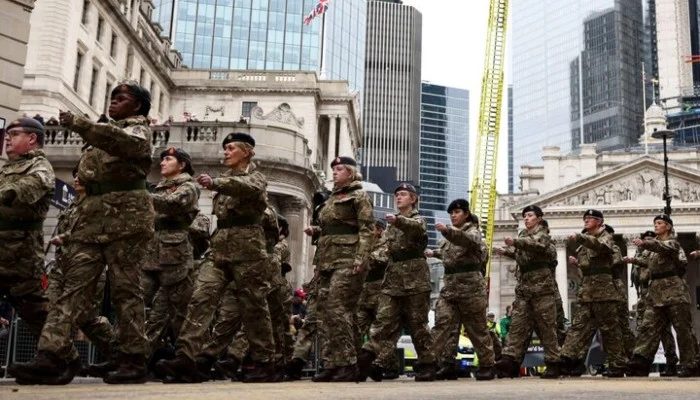
Half of Britons say there are no circumstances in which they would go to war for their country, a poll has found, the Telegraph reported. While the pollster Ipsos found strong backing for increased defence spending, some 48 per cent said there was no situation in which they would take up arms.
The figure has barely changed since April 2025, despite calls for a "national conversation" on defence, and rising concerns about the threat from countries including Russia, China and Iran. Just 36 per cent said there were circumstances in which they would fight, little more than the 35 per cent who said the same thing last year.
Hamish Mundell, an associate fellow at the Royal United Services Institute, said there were questions about "Britain's willingness to fight and make sacrifices", but that the Ipsos poll did not suggest the country would be unable to mobilise in the event of a conflict.
He added that the figures would probably not worry military planners, as the constraint on numbers was not finding enough people willing to fight, but the difficulty in training and equipping them. Men in general were the only group in which more people said they would fight than would not, with 48 per cent saying there were circumstances in which they would go to war and 40 per cent saying they would not be willing to do so.
But a majority of women and people aged 35-54 said they would not fight. Despite individual reluctance to go to war, Ipsos found 51 per cent of people backed an increase in defence spending, almost twice the 28 per cent who supported such a move in June 2022.
But the public remains split on how to pay for such an increase. Of those who support higher spending, 37 per cent said it should be paid for with spending cuts elsewhere, while 36 per cent were prepared to pay more tax.
By far the most popular way of raising money for defence was increasing income tax on those earning more than £125,000 a year, with 46 per cent supporting such a move. Mundell said the figures were "hardly surprising", but that it was "disheartening that we don't seem to have any form of leadership from the Government on a pathway to Britain's 3.5 per cent Nato commitment".
Last year, the UK and other Nato allies agreed to spend 3.5 per cent of GDP on "core defence" by 2035 under pressure from Donald Trump to increase military spending. Mundell said: "I am sceptical that we need another national conversation before we can make those decisions.
We need political leaders to explain the threats facing the country, set out what needs to be done and just go and do it, even where that might prove contentious." James Cartlidge, the shadow defence secretary, said Labour should cut welfare spending, urging the Chancellor to use the Budget to set out a plan to spend 3 per cent of GDP on defence by 2030.
He said: "In an increasingly uncertain and dangerous world, with threats growing on multiple fronts, we need to get serious about funding defence, and make the tough choices needed to protect our national security. That means cutting welfare spending and investing billions into improving our defensive capability.
Yet Labour continues to prioritise a ballooning welfare bill over our national security." The Ipsos poll surveyed 1,090 British adults between Sept 29 and Oct 1.