
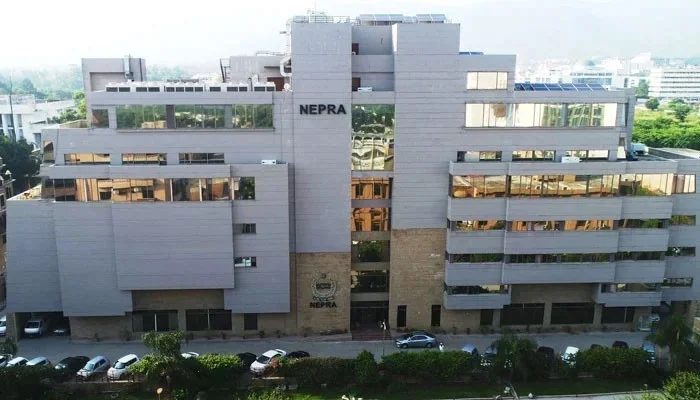
The government will strengthen the power sector regulator, the National Electric Power Regulatory Authority (Nepra), in the wake of the changing landscape of the sector amid increasing solar panels on the rooftops of households in the country. Federal Minister for Finance and Revenue, Senator Muhammad Aurangzeb, chaired the second meeting of the Steering Committee on Power Sector Regulatory Regime at the Finance Division on Wednesday to review progress and advance reforms aimed at strengthening the regulatory framework of the power sector and promoting efficiency, investment, competition, and greater private-sector participation.
The committee received an update on the ongoing work on Pakistan's power sector transformation and discussed the significant changes taking place in the industry, including growing solarisation and changing demand patterns. The finance minister noted that the evolving power sector landscape required a regulatory framework capable of responding to technological developments while supporting efficiency, investment, consumer interests, and greater private-sector participation.
The committee discussed key structural and emerging challenges facing the sector, including legacy capacity obligations, changing grid-demand patterns, service quality, investment constraints, and the need to further strengthen incentives for efficiency. The discussion also focused on improving regulatory predictability, better targeting of subsidies, and strengthening the overall investment climate to support a more efficient, competitive, and financially sustainable power sector.
The finance minister stressed the need to develop a market structure that provides clearer incentives for efficiency and service quality, while creating greater space for competition, private-sector participation, and investment. The committee discussed the potential for greater separation between network and supply functions, with distribution network operators focused on the efficient operation and maintenance of the network, while competitive supply businesses operate within an appropriate regulatory framework.
Furthermore, the committee emphasized that the transition toward a more decentralized power generation model, driven by solar energy, necessitates a robust regulatory oversight mechanism. This will ensure that the national grid remains stable while accommodating intermittent power inputs from residential and commercial solar installations.
The participants also deliberated on the financial implications of the current tariff structures and the impact of net-metering on the overall revenue collection of distribution companies. The government aims to balance the benefits of renewable energy adoption with the financial viability of the existing power infrastructure.
In conclusion, the steering committee reaffirmed its commitment to implementing structural reforms that align with global best practices. The focus remains on creating a transparent, efficient, and consumer-friendly power market that can withstand the pressures of modern energy demands and technological shifts.