
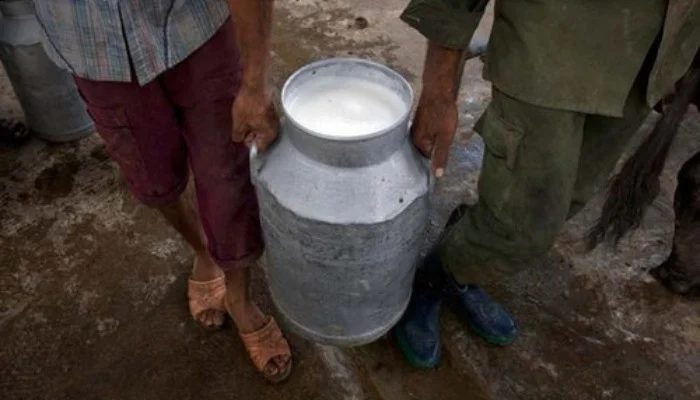
Pakistan may opt to liberalise its dairy market and exclude milk from the essential commodities list, representing a significant reform designed to encourage investment and position the nation as a dairy exporter rather than merely a major milk producer. The move is part of a broader policy framework titled 'Attracting Investment to Enhance Pakistan's Dairy Exports' - prepared by the Planning Commission, Ministry of National Food Security, Food and Agriculture Organization (FAO), and industry under the URAAN Pakistan initiative.
As the world's fourth-largest milk producer, Pakistan generates 72 billion litres annually, representing approximately 7.0 per cent of global production. However, the country exports limited quantities and faced a dairy trade deficit of $37 million in 2024, despite the global dairy sector being valued at $50 billion.
According to the policy analysis, the underlying challenge is systemic; the majority of milk distribution occurs through informal channels, with only 5.0 per cent undergoing formal processing. Indigenous cattle breeds yield lower milk volumes compared to those in India, the US, or European nations.
Existing price regulations have maintained affordability but simultaneously discouraged quality improvements and prevented the accumulation of exportable surplus. By recommending a series of interventions, the strategic initiative establishes ambitious benchmarks: $500 million in annual dairy exports by 2029-30 and $2 billion by 2035.
To accomplish these objectives, the government intends to empower the commercial sector as the primary driver. Large-scale dairy enterprises will consolidate smallholder farmers into cooperative structures, furnish them with contemporary technology, and procure their milk through contractual agreements featuring mutually determined pricing and quality benchmarks.
A comprehensive set of taxation and other incentives has been proposed to strengthen the national dairy sector. The goods and services tax (GST) on value-added dairy products may be reduced from 18 per cent to 5.0 per cent, while import duties on dairy machinery, genetic material, and feed ingredients may be eliminated or restricted to 5.0 per cent.
Licensed dairy farms and processing units could benefit from agricultural electricity rates. Cold-chain infrastructure development, particularly solar-powered milk chillers, may receive financial support.
The policy directly addresses animal health challenges; foot and mouth disease and lumpy skin disease have restricted the country's international market access. A proposed national digital animal disease surveillance and traceability system, combined with disease-free dairy zones in Punjab and Sindh accredited by the World Organisation for Animal Health (WOAH), aims to resolve these issues.
Another critical focus involves preventing the loss of productive female animals and young calves - approximately 1.5 million dairy animals and two million calves are lost annually, compromising breeding stock quality. Additional initiatives include expanding sexed semen and embryo transfer laboratory capacity, facilitating loans for smallholder farmers by permitting livestock as collateral, and creating Dairy Export Processing Zones connected to Gwadar and Karachi ports to meet regional demand, particularly in China.