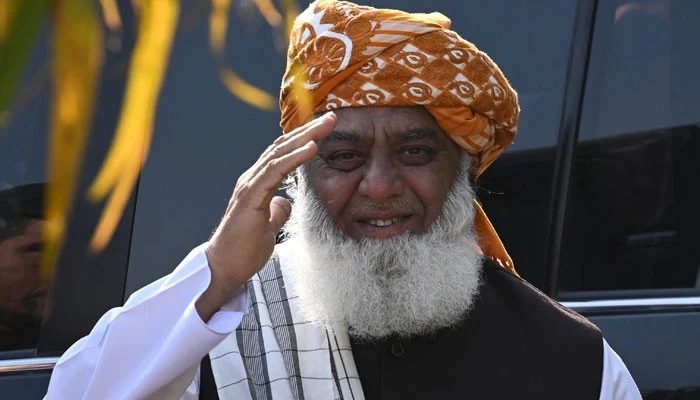
ISLAMABAD/PESHAWAR: Following a crucial meeting between a government delegation and Jamiat Ulema-e-Islam-Fazl (JUI-F) chief Maulana Fazlur Rehman, reports emerged on Thursday that the party head contacted the Pakistan Tehreek-e-Insaf (PTI) leadership to convey the government's latest political proposal. According to well-placed sources, Maulana Fazl had earlier advised the federal administration to resolve escalating political disputes through constructive dialogue rather than resorting to extreme measures such as imposing emergency or governor's rule in the provinces.
Federal ministers Rana Sanaullah, National Assembly Speaker Ayaz Sadiq, and senior leader Tariq Fazal Chaudhry had recently held detailed consultative meetings with the JUI-F chief at his residence. Meanwhile, separate backchannel discussions also took place between PTI Chairman Barrister Gohar and Interior Minister Mohsin Naqvi to defuse the prevailing political tension.
These fast-paced developments followed a prolonged deadlock in formal negotiations between the ruling coalition and the opposition, alongside the high-profile long march led by Khyber Pakhtunkhwa Chief Minister Sohail Afridi. However, JUI-F Khyber Pakhtunkhwa General Secretary Senator Maulana Ataul Haq clarified during a media talk that Maulana Fazlur Rehman was not formally mediating official talks between the government and PTI.
Senator Ataul Haq added that local leaders from the opposition did discuss overall political strategy and national issues during a courtesy meeting following the JUI-F chief's return from Saudi Arabia after performing Umrah. He emphasized that while peaceful protest remains a fundamental democratic right for every political party, the Khyber Pakhtunkhwa chief minister must prioritize effective governance and administrative responsibilities.
Highlighting the plight of the province, the JUI-F leader noted that pressing provincial challenges such as deteriorating law and order, systemic flaws in education, and declining health services required the undivided attention of the provincial chief executive. He maintained that political point-scoring should not come at the cost of public service delivery in the region.
Reacting sharply to the ongoing political standoff, Federal Defence Minister Khawaja Asif warned the PTI leadership that pressure tactics, agitation, and unauthorized long marches would not secure any legal or political relief for incarcerated party founder Imran Khan. The minister accused the opposition party of pursuing a confrontational agenda aimed at destabilizing the country.
Furthermore, Khawaja Asif claimed that PTI's aggressive political approach closely mirrored militant tactics, asserting in strong terms that the state would never yield to political blackmail or intimidation. Political analysts believe that while backchannel contacts are underway, the deep-seated mistrust between the ruling alliance and PTI continues to hinder any breakthrough.
The federal government insists that doors for parliamentary dialogue remain open, provided the opposition operates strictly within constitutional and legal frameworks. On the other hand, PTI remains adamant that its agitation will continue until its core demands, including the release of detained leaders and a transparent judicial inquiry into election disputes, are met.
As diplomatic and political maneuvers continue across Islamabad and Peshawar, civil society and business circles have urged both sides to exercise restraint and prioritize national economic stability over partisan politics. The coming days are expected to be critical in determining whether political stakeholders can find a middle ground or if confrontation will define the legislative landscape.